
The latest VFACTS figures on Australia’s new vehicle market have revealed it remained in rude health in September, with a total of 108,778 sales representing a 1.8 per cent increase on the numbers from the same month last year. Ford’s Ranger is one of the biggest winners as it regained the title of the most popular vehicle down under in a major turnaround.
Toyota remains top of the manufacturers table with 17,682 sales and 17.2 per cent market share, with BYD closing the gap in second with 8191. Ford (third), Kia (fourth) and Mazda (fifth) all recording drops compared to their September 2025 sales. Tesla is sixth after shifting 5654 vehicles during the month.
Adding Tesla and Polestar’s figures to the VFACTS numbers reveals that the EV percentage of the total Aussie new-car market is approximately 24.2 per cent, which is slightly down from the 24.9 per cent mark recorded in August, when BEVs outsold petrol and diesel vehicles for the first time ever.
That is once again the case with the latest results, which also show 49.8 per cent of all new vehicles sold in September were electrified. Hybrids accounted for 17,843 sales, with 10,072 plug-in hybrids bought once the VFACTS figures are combined with data from the Electric Vehicle Council.
Chinese carmakers are once again strongly represented in the top 10 manufacturers, with GWM in seventh, MG in ninth and Geely in 10th, just ahead of Chery in 11th spot. The top 10 rankings are the same when it comes to the total sales numbers for 2026 so far.
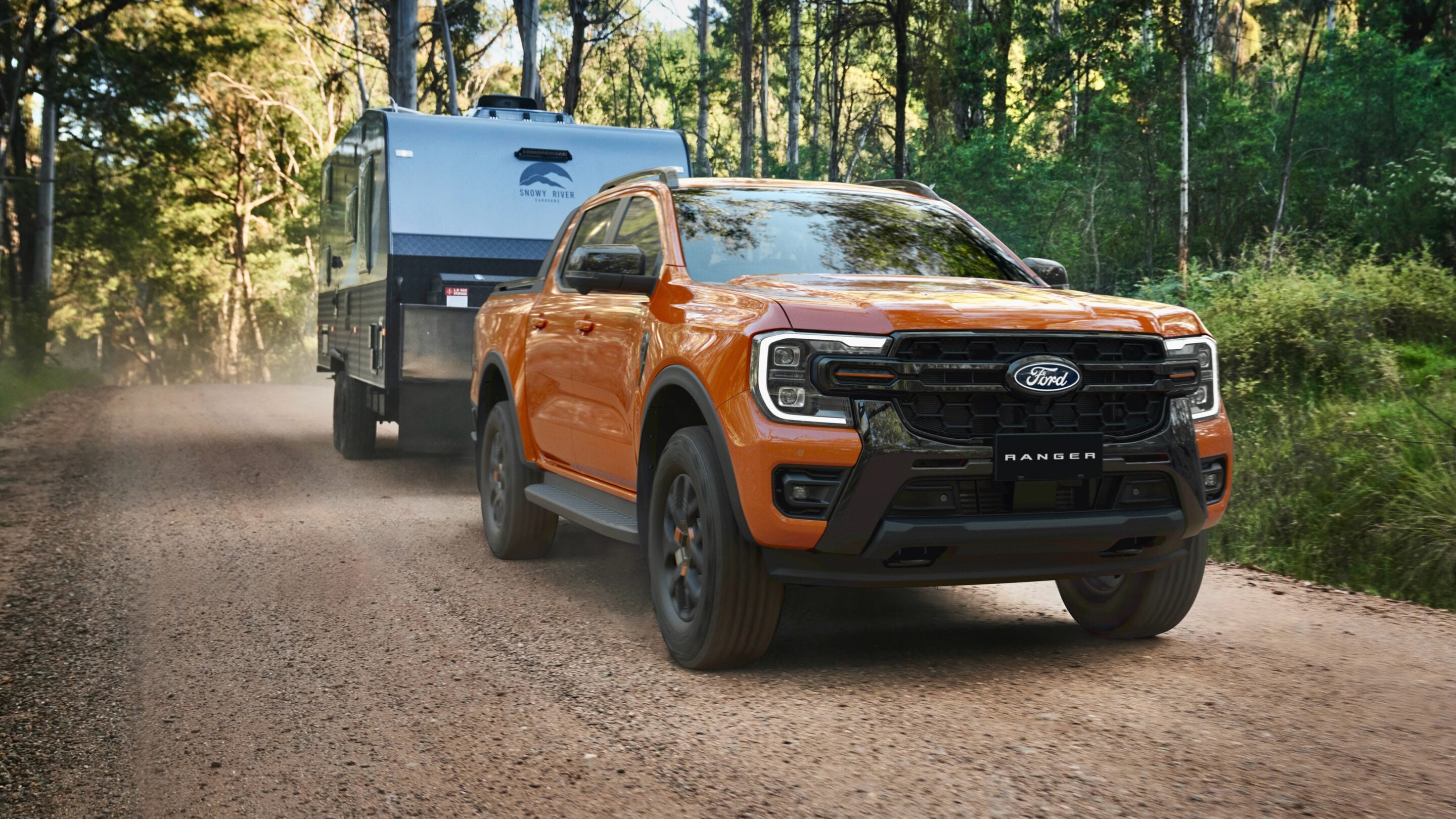
Ford’s Ranger became the most popular vehicle in the country with sales of 5062 in September, up from 4867 in the same month last year. The Ranger topped the VFACTS monthly sales charts in January, February and March this year, but hadn’t been No.1 since. It dropped to fifth in August with 2440 deliveries, and was fourth in July with 4042 sales. Those August figures were skewed by the halting of deliveries due to an airbag issue that forced a recall, however.
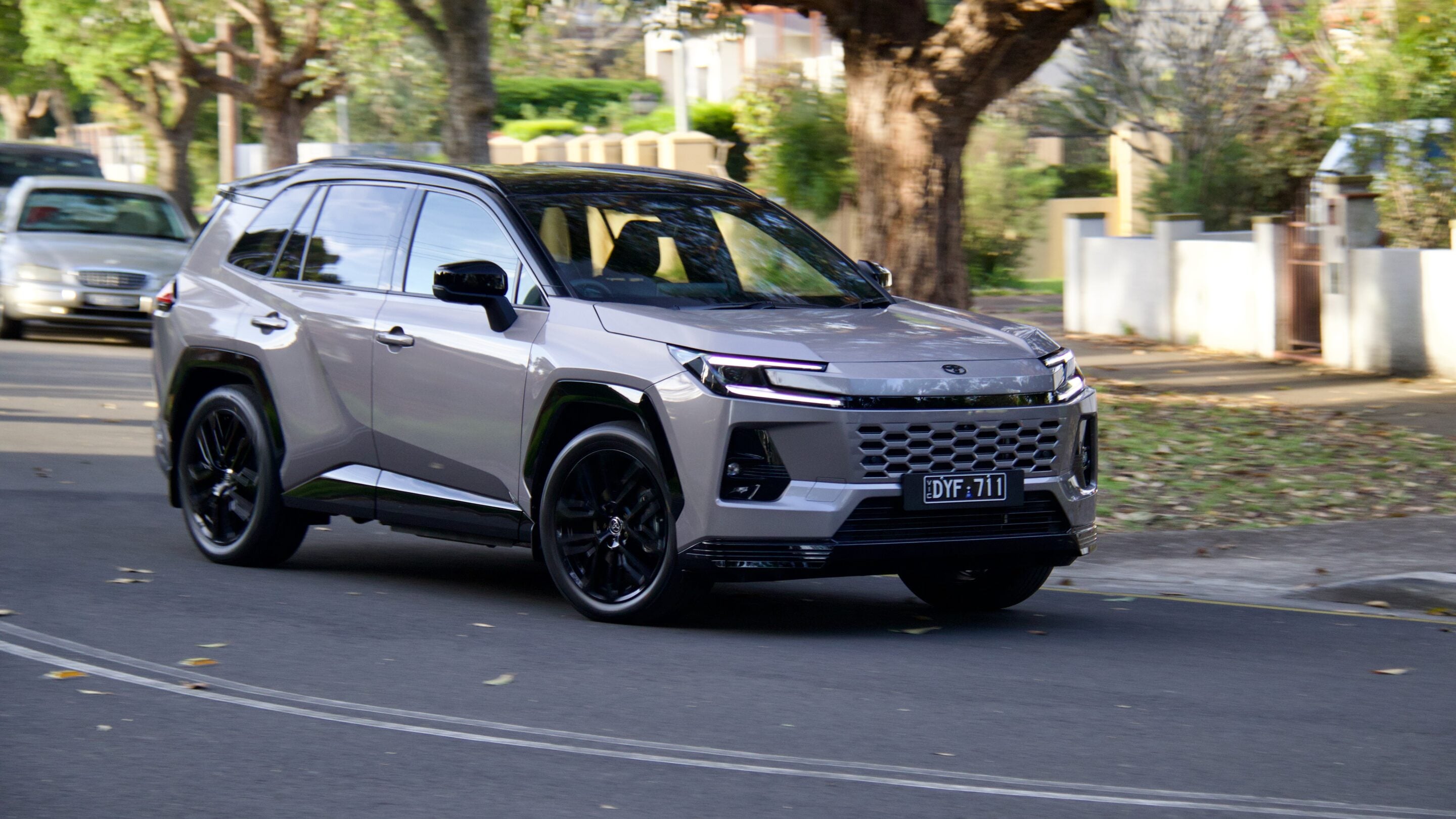
The Toyota RAV4 is the second-most popular new vehicle on 4624, then it’s the Tesla Model Y with 4476 deliveries, Toyota’s Hilux on 4455 and the BYD Sealion 7 on 2687. Following them are the Chery Tiggo 4 Pro (2059), GWM Haval Jolion (2018), Geely EX5 (2008), Toyota Prado (2006) and Isuzu D-Max (1866).
BYD is still a fair way off Toyota for the title of best-selling manufacturer, but this is the sixth straight month the Chinese brand has locked up second spot and it recorded an increase, whereas Toyota fell as its HiLux suffered a drop of almost 12 per cent year on year.
Of the top 10 best-selling vehicles, three are electric: the Tesla Model Y, BYD Sealion 7 and Geely’s EX5. Compared to this time last year, sales are down in NSW by 0.8 per cent, with the NT recording a fall of 13.3 per cent, with Western Australia down by 1.6 per cent and South Australia by 0.3 per cent.
Light commercial sales suffered a 13.2 per cent decline compared to September 2025, but that was offset by a 6.3 per cent rise in the number of passenger vehicles sold, and a 6.1 per cent jump in sales of SUVs.
“The changes seen throughout this year are continuing. many consumers are making practical decisions and selecting from the range of available technologies that best meet their needs,” said Federal Chamber of Automotive Industries acting CEO Dianne O’Hara.
The battle for affordable electric cars in Australia is heating up with the new Leapmotor B03X small SUV priced from just $29,990 driveaway ahead of its local arrival in November. That makes the B03X the cheapest electric SUV currently offered down under, according to Leapmotor, with the compact newcomer undercutting an increasingly crowded field of affordable EVs.
Two B03X variants will be available from launch: the entry-level Style priced from $29,990 driveaway, while the longer-range Design LR is priced $4000 higher at $33,990 driveaway. The Style uses a 39.8kWh LFP battery providing up to 292km of WLTP driving range, paired with a front-mounted electric motor producing healthy outputs of 130kW and 200Nm.
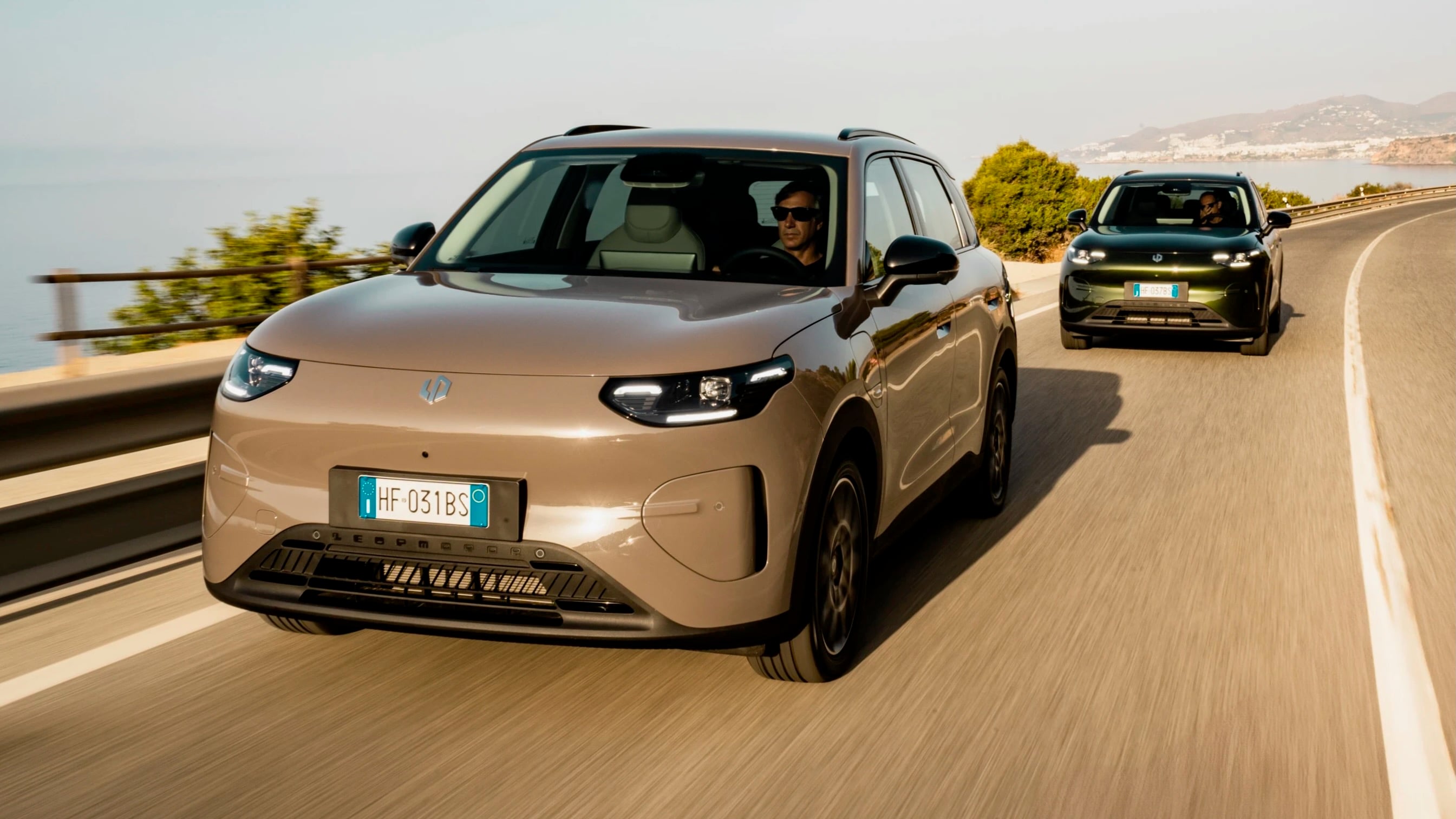
Spending the extra on the Design LR increases battery capacity to 53kWh, which extends the claimed range to a more road-trip-friendly 382km on the WLTP cycle. Power also rises to 145kW with torque pegged at 200Nm, although Leapmotor quotes the same 8.6-second 0-100km/h time for both variants, likely due to the larger battery’s extra weight.
As for charging ability, both models feature an 11kW AC onboard charger, while the Style can DC fast-charge at up to 100kW and the Design LR increases that to a healthier 133kW. Leapmotor claims a 30-80 per cent recharge can take as little as 16 minutes, while both versions also feature 3.3kW vehicle-to-load (V2L) capability.
Measuring 4270mm long and 1810mm wide with a 2605mm wheelbase, the B03X sits firmly in small-SUV territory and is actually as long as the Mazda CX-3. Leapmotor says there are 33 storage areas throughout the cabin, plus 475 litres of cargo capacity with the rear seats up and 1315 litres of capacity with those seats folded.
Despite its bargain price, the B03X is well equipped with 18-inch steel wheels with covers, roof rails, automatic LED lighting, automatic wipers, a 14.6-inch central touchscreen with live services and over-the-air updates, wireless Apple CarPlay and Android Auto. There’s also satellite navigation, an 8.8-inch digital driver’s display, wireless phone charging, fabric upholstery, a synthetic leather-wrapped steering wheel and single-zone automatic climate control.
Safety features include seven airbags, autonomous emergency braking, adaptive cruise control with automatic lane changes, adaptive lane guidance, lane-keeping assistance, blind-spot monitoring, rear cross-traffic alert with braking, door open warning, driver attention monitoring, traffic sign recognition, rear parking sensors and a reversing camera.
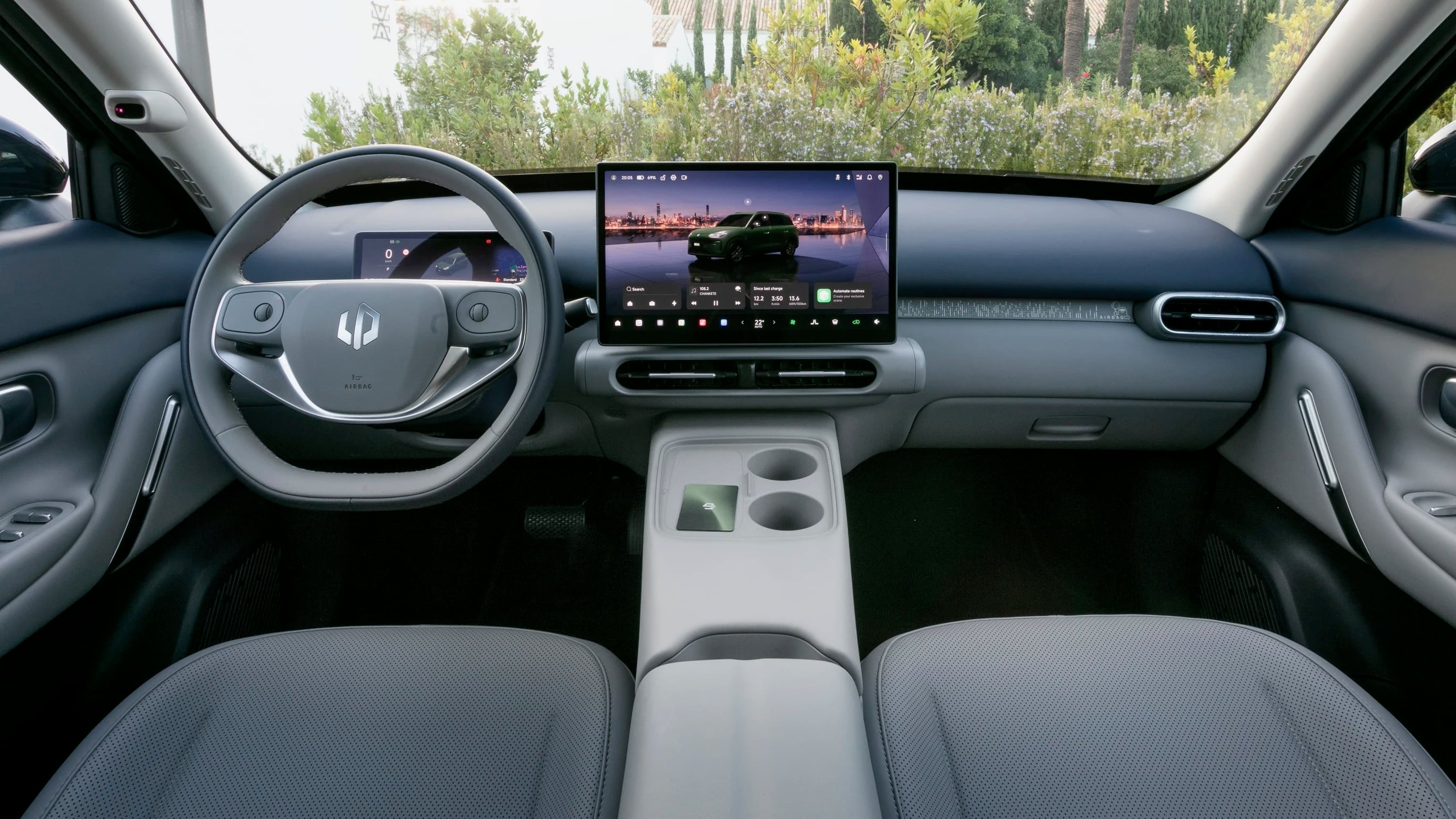
On top of the Style, the Design LR adds 18-inch alloy wheels, auto-folding mirrors, synthetic leather trim, heated front seats, heated steering wheel, electrically adjustable driver’s seat, 12-speaker audio, ambient lighting, front parking sensors, a 360-degree camera and an integrated dashcam.
Leapmotor will back the B03X with a six-year/150,000km vehicle warranty and an eight-year/160,000km high-voltage battery warranty, alongside eight years of roadside assistance.
Leapmotor B03X pricing (driveaway):
- Style: $29,990
- Design LR: $33,990
The 2027 Leapmotor B03X will arrive in Australian dealerships in November, giving buyers one of the cheapest ways yet to put a new electric SUV in the driveway.
Welcome to the Department of Tough Gigs. This Month: The pure-electric mid-sized SUV.
Homogenisation is the – unfortunate – name of the game here. SUV packaging, combined with current aero-faux, has forced the butternut-pumpkin-on-its-side profile upon us. The now-default skateboard architecture has played its part, and the relentless march of the Chinese brands has done the rest.
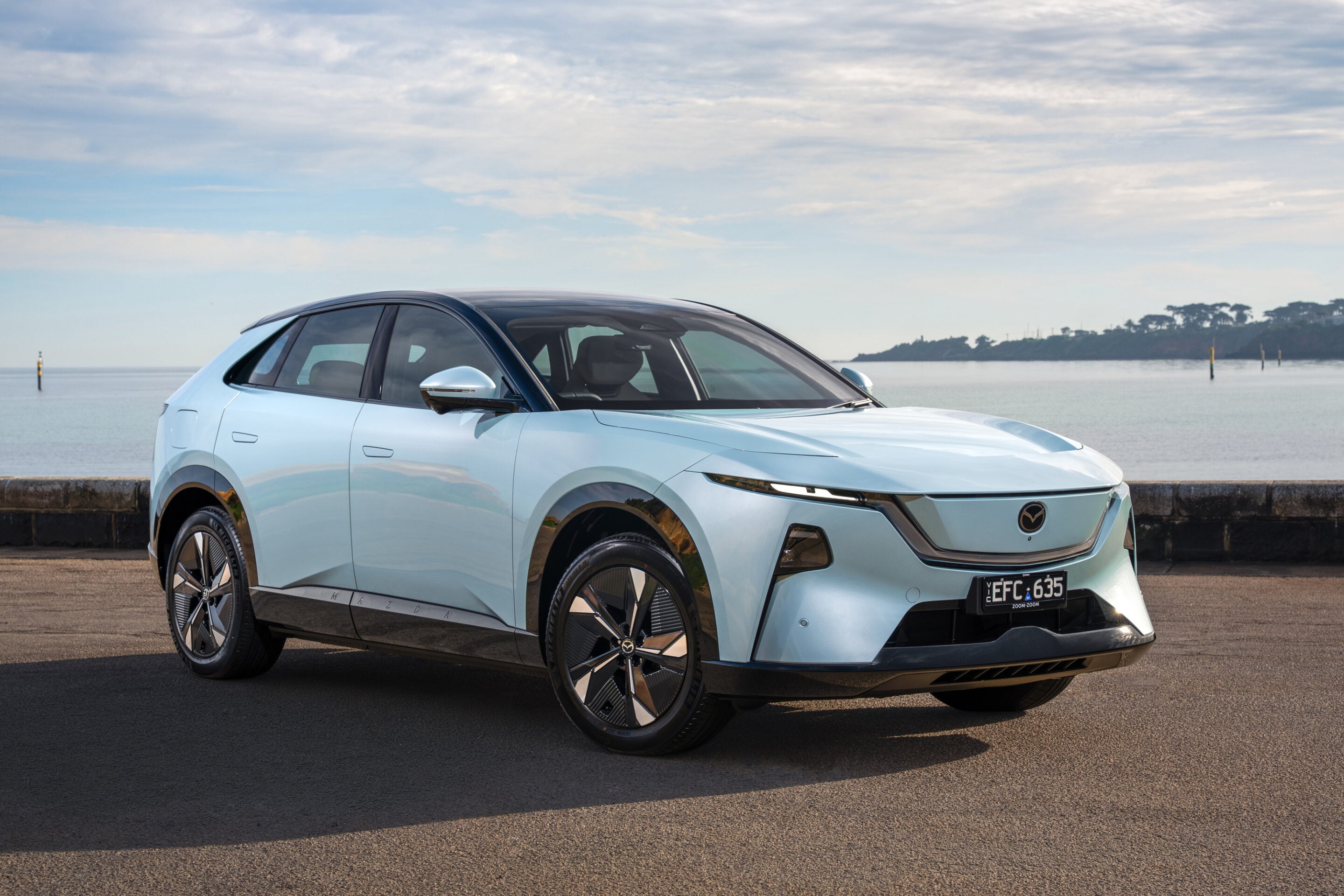
Enter the Mazda CX-6e. It’s no secret that the CX-6e is not only made in China, but shares its platform with the Deepal SO7 as part of a joint venture. Which raises the spectre of whether the shared product of a ubiquitous concept can ever be as Mazda as Mazda fans would demand.
And the `tough gig’ thing is actually selling the reality short: A successful modern EV SUV needs to be brilliantly specified (connectivity is a gimme, comrade) capable of anxiety-beating range and, just lately, served up at a price that renders the notion of front-loading your EV running costs, yesterday’s thinking. And yet, despite that mission-impossible brief, that same modern car-maker can’t afford to be without such a thing in its showrooms.
Which is how Mazda arrived – some would say, belatedly – at the CX-6e, the brand’s first all-EV SUV.
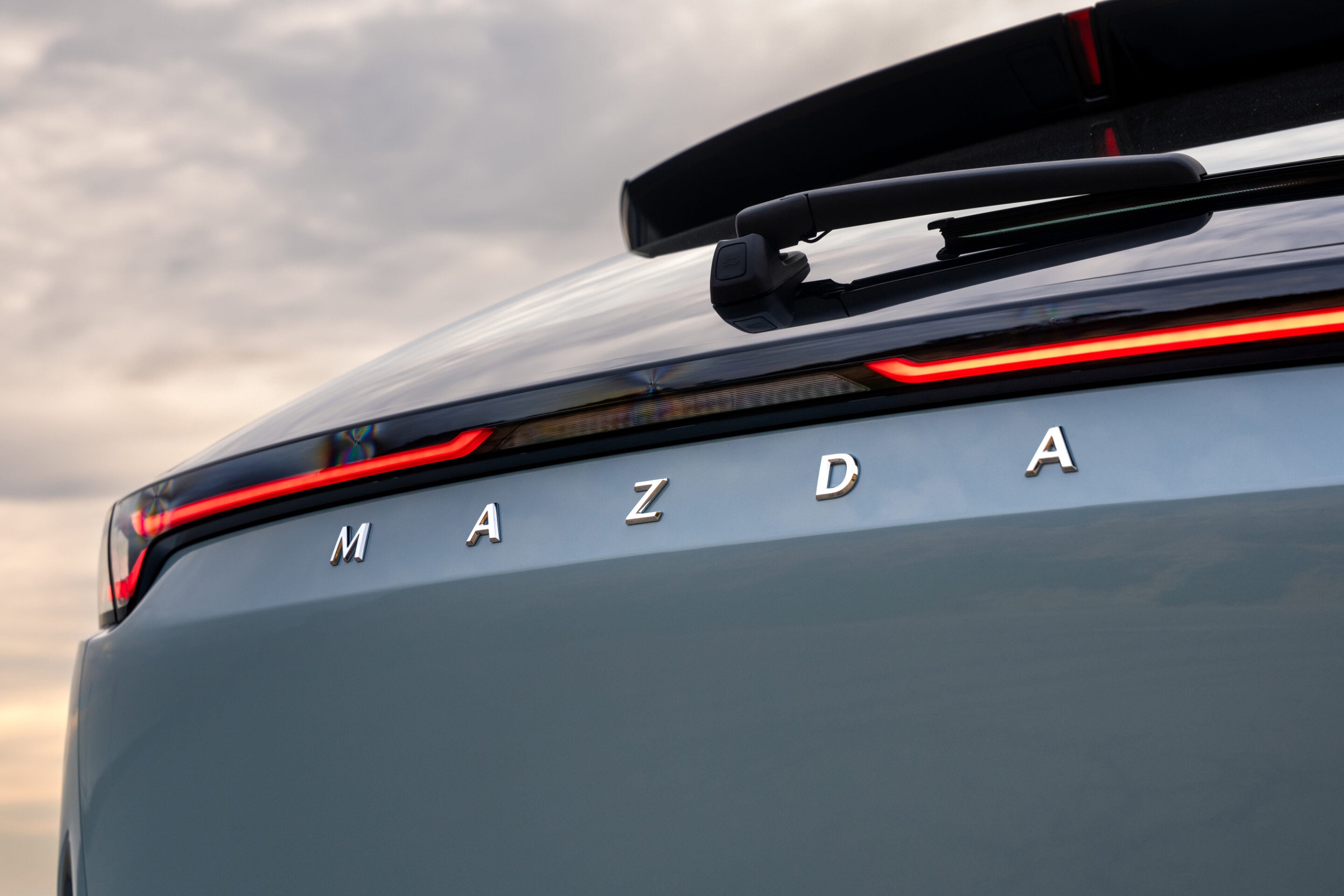
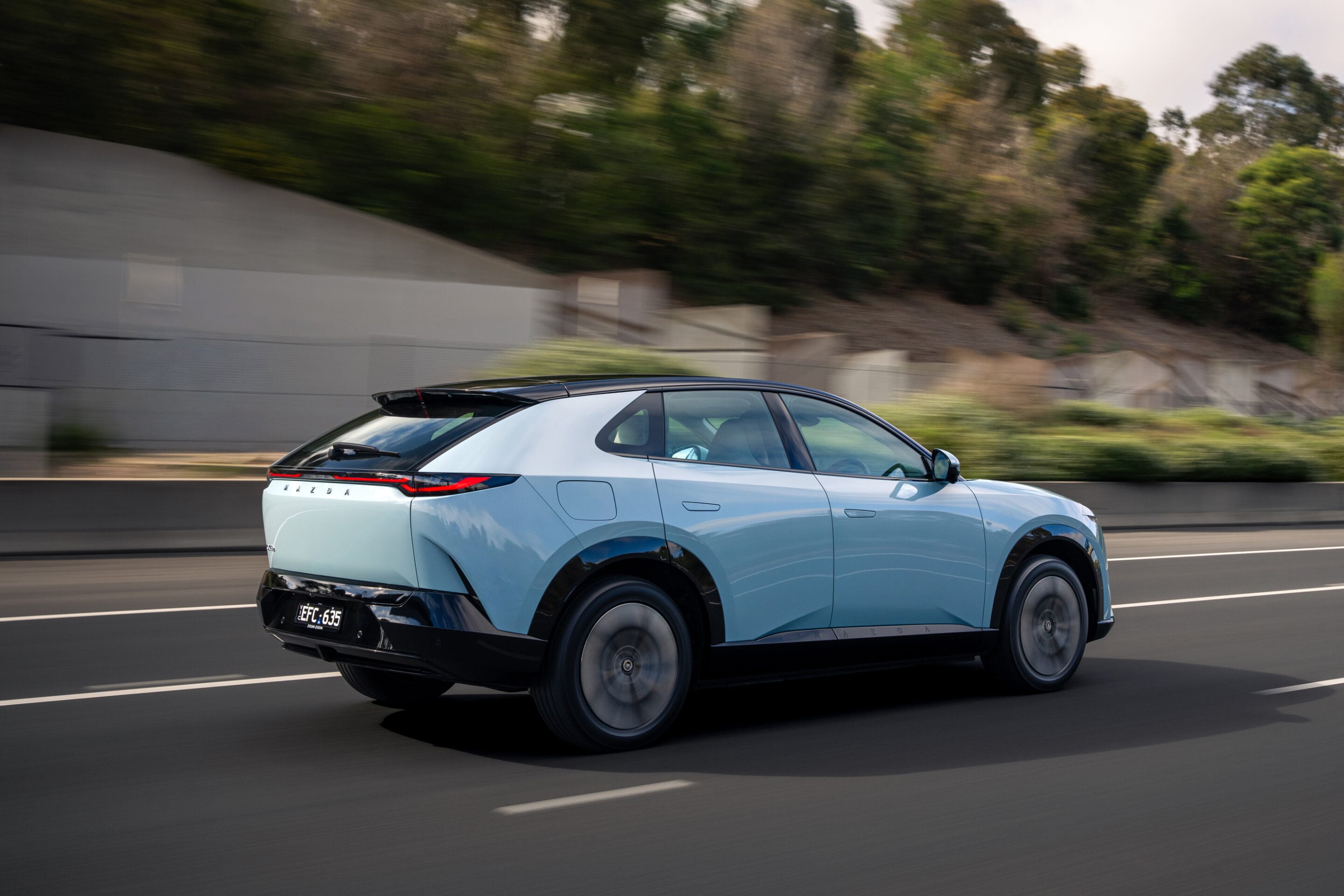
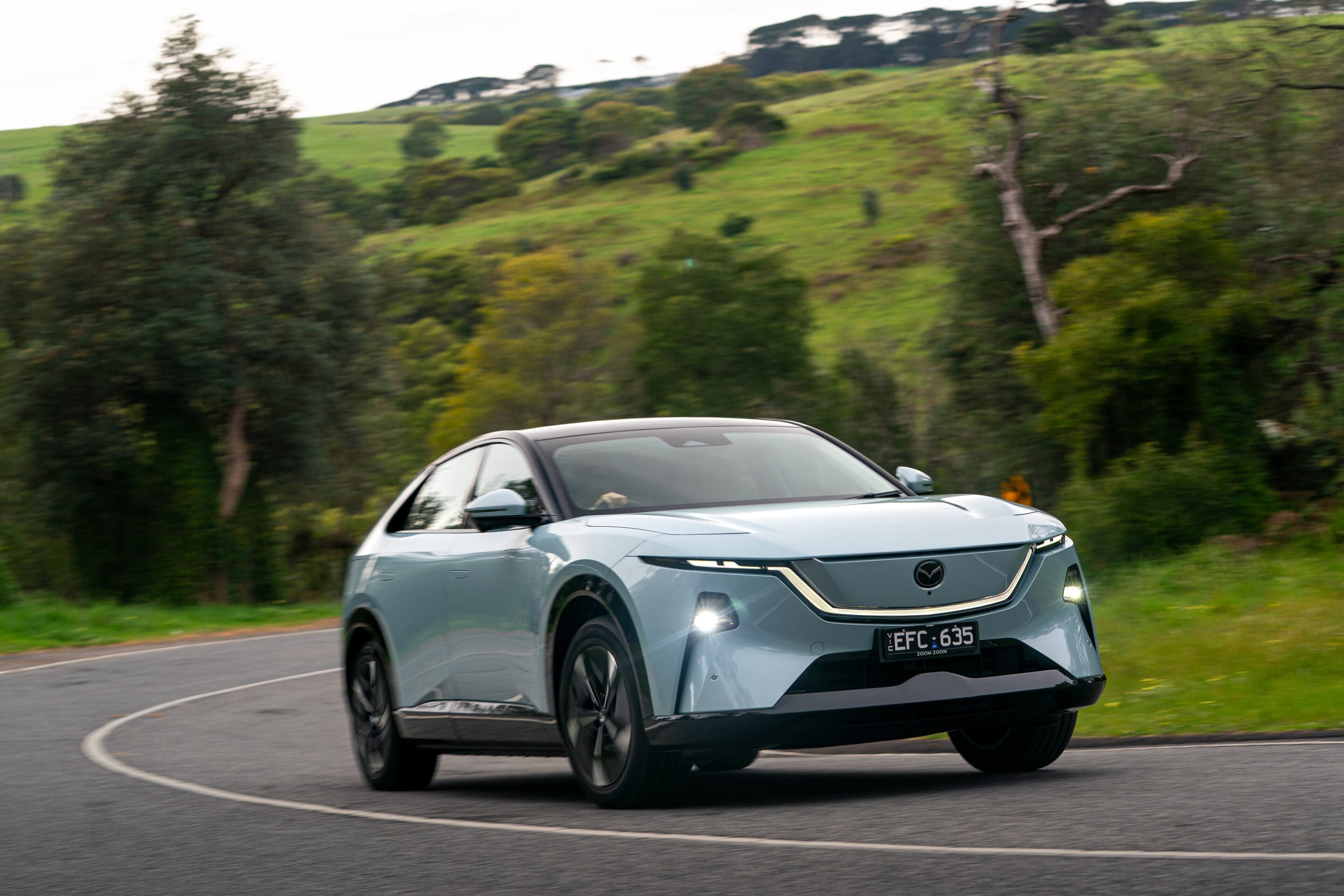
But despite all that talk of homogenisation, the Mazda really does manage to stick its neck out stylistically, starting with the sheer size of the thing. Frankly, it looks like it should be a seven-seater rather than the five-seater it is, but maybe that’s the cost of staying with Mazda’s Kodo design language that insists upon a long nose and a (relatively) rear-set cabin. But look again, and the CX-6e continues to stand out from the pack. There’s some angularity to it, a few swooshes, some wild looking wind-tunnels in the flanks and a rump that, in profile, is rather fetching. From dead-behind? Er, not so much and this is clearly the Mazda’s least flattering angle.
That size thing is reinforced once you step inside, too. There’s a lot of space on offer and not just in the front seats. The rear pew loses points for its centre position being like sitting astride a speed hump, but the outside spots are comfy and exceptionally spacious. Head, knee and legroom? Oodles. And there are climate controls, too.
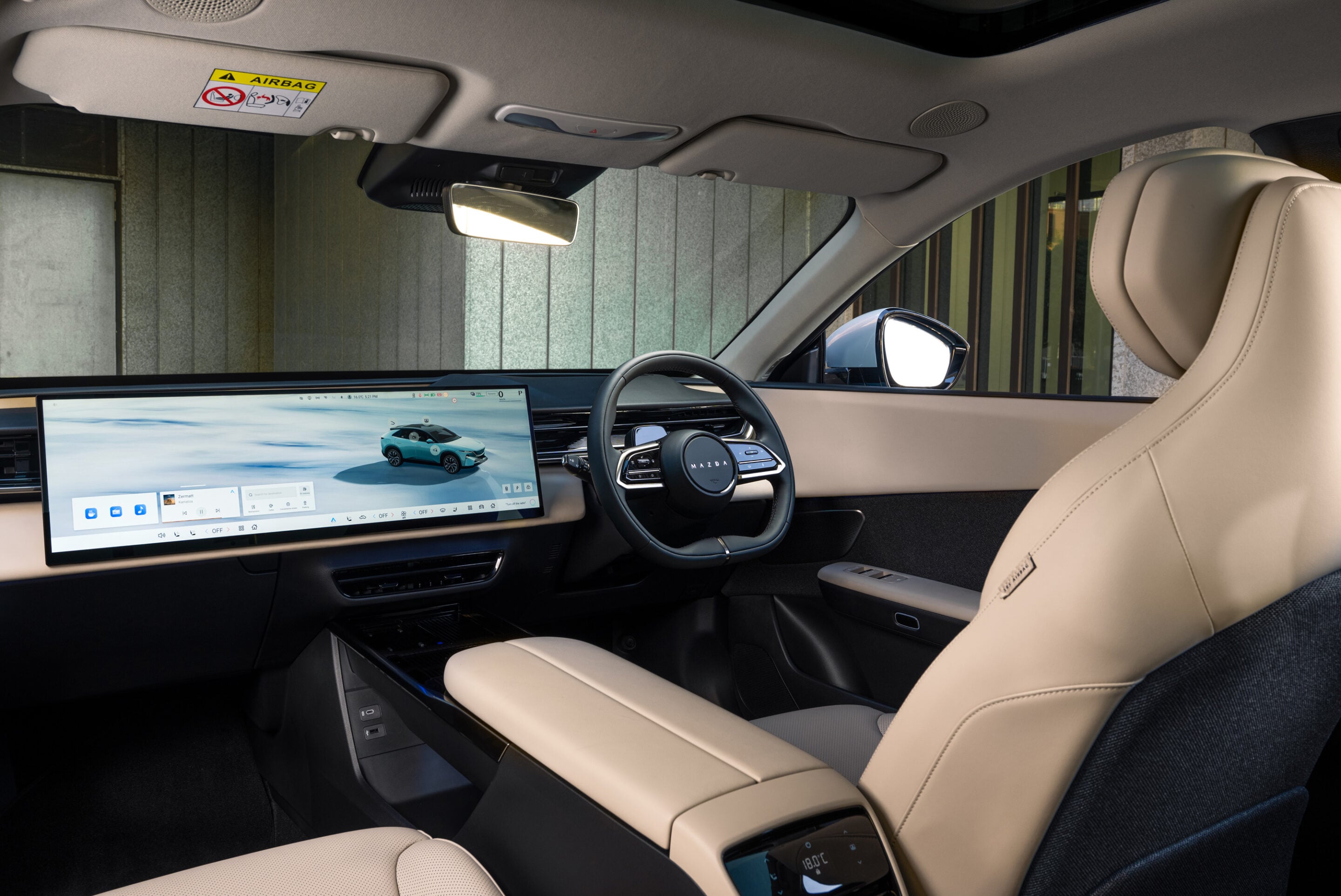
Back up front, there’s wireless charging, a head-up display, large central bin with a split lid and plenty of charge ports. The frunk is not especially huge, but the cargo area is about right even if the underfloor storage area is a bit fake news.
But that same interior seems a bit try-hard in other respects. The h-u-g-e central screen is not central at all but, in fact, extends farther to the passenger’s side. That gives the tormentor in the jump seat the opportunity to fiddle with a second map and generally fuss about with menus, while just being just within the driver’s peripheral vision for maximum distraction.
The upmarket version of the CX-6e also features digital (read: camera) interior and exterior mirrors and these are as annoying as any other car-maker’s attempt at the same tech. The interior mirror requires those who use reading glasses to don them for maximum clarity (not terribly convenient for also watching the road ahead) and the usual depth-of-field shallowness is also apparent. And the exterior mirrors (sorry, cameras) on stalks convey their image capture to a screen in the corner of each front door to electronically answer the question nobody ever asked. Happily, the entry-level model misses out on these trappings of executive life.
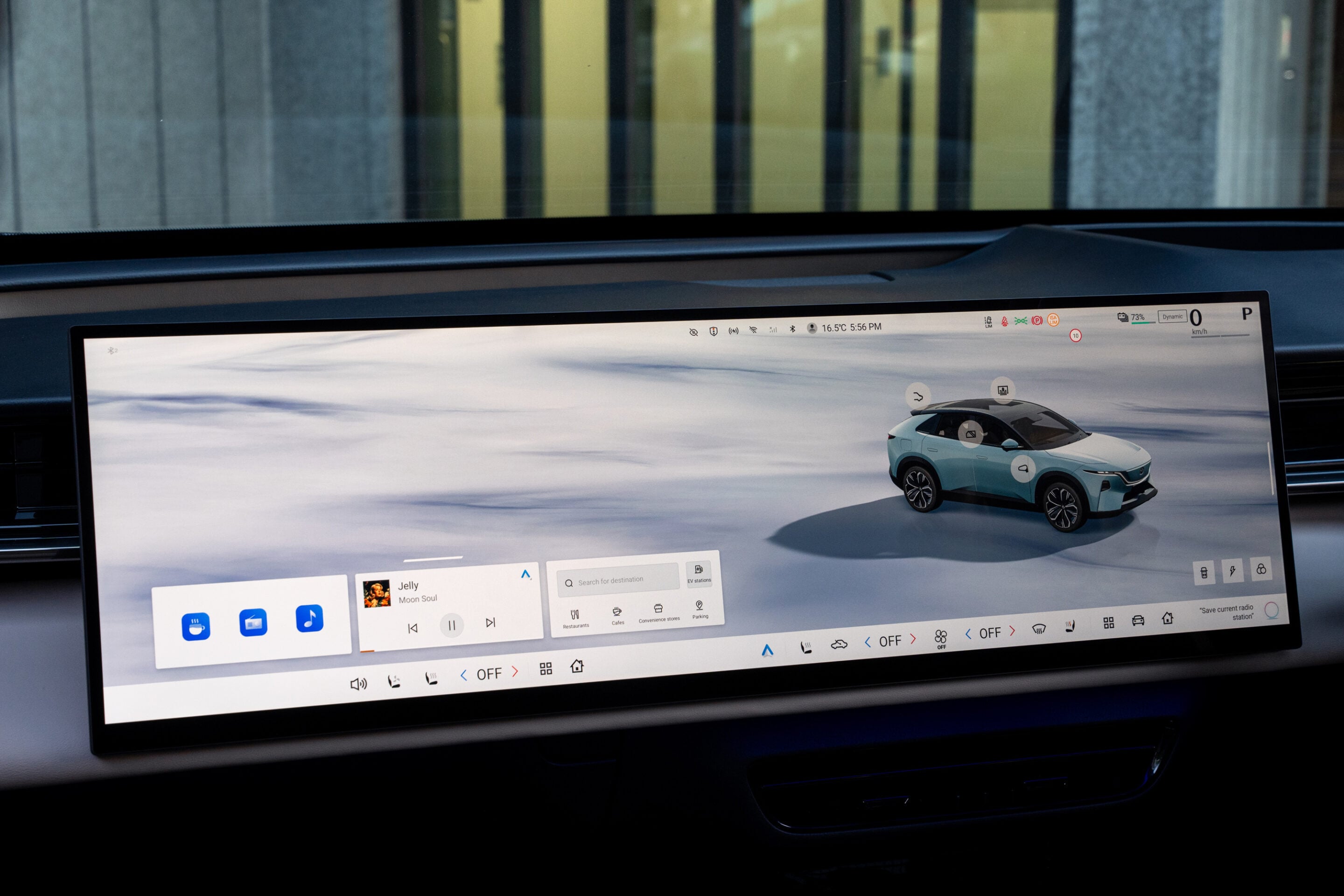
I’m also going to call Mazda out for the lack of physical switches on show. More accurately, for the otherwise simple functions that have been rendered complex and frustrating through the use of menus and touch-screens.
Let’s start with adjusting those mirrors (regardless of model and level of mirror complexity). First you need to mine the screen for the right menu, select mirror adjustment and then take a shot at which of the arrows on the steering wheel will achieve the angle you desire.
And what about the panoramic sunroof’s blind? Is there a switch located conveniently and logically next to the sunroof? Is there bollocks. Instead, it’s back to drilling though menus until you reveal the blind control on the screen and hit the touch-button to open or close it. No kidding.
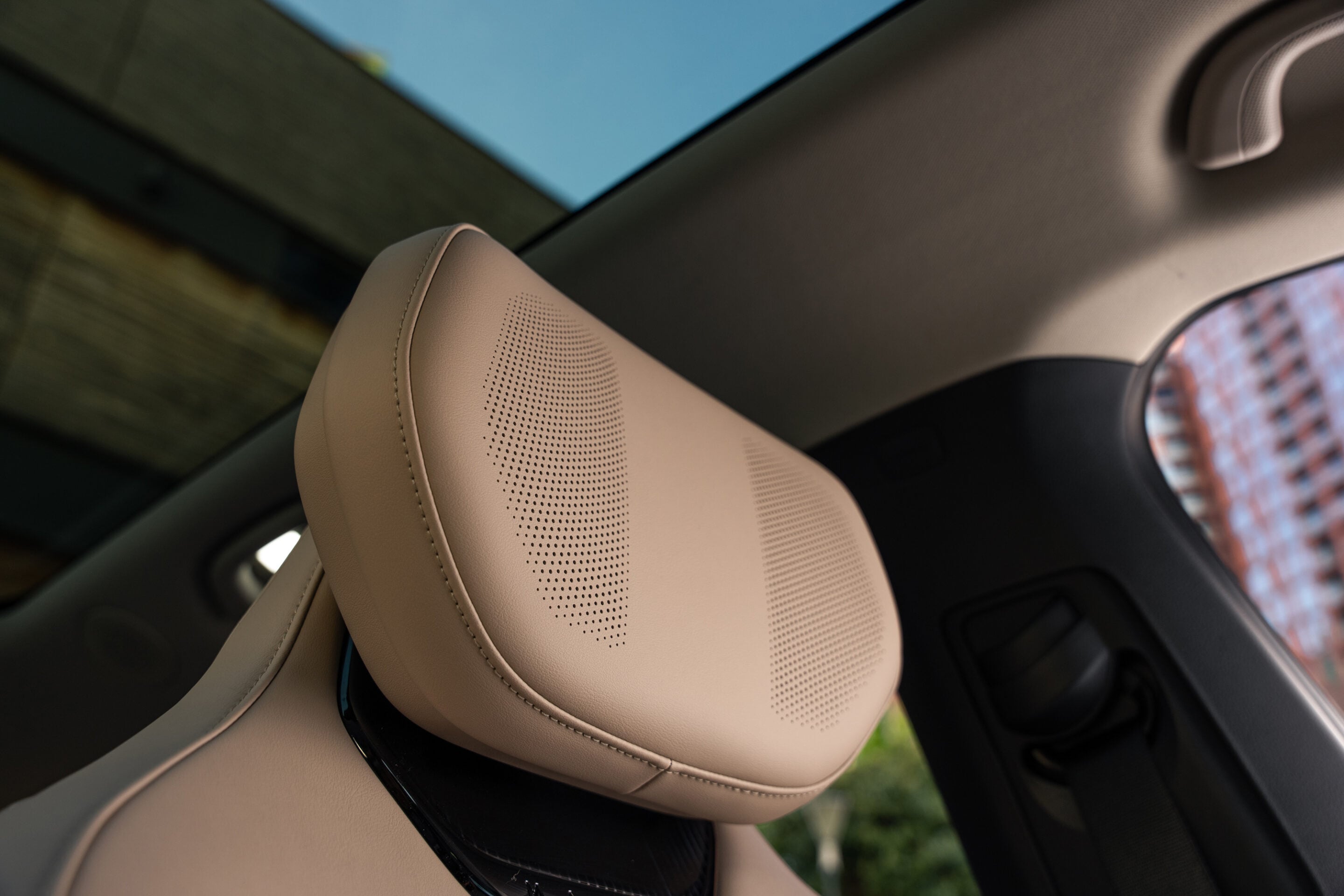
The caveat? All these functions are also operable via the voice-command system. Which is fine if you don’t mind talking to inanimate objects.
Even externally, there’s evidence that the CX-6e, built in China as a joint venture with Changan Automotive, has maybe started to adopt a few Chinese-car protocols. The hatchback release button is a great example. Is it anywhere you’re likely to look for it? In fact, it’s opened by a small, black on black push-button that’s actually part of the rear wiper mount assembly. Or you can open it via your phone and the Mazda app (yeah, right).
And here we go again; learning how to operate a car all over again. Not to mention that the ADAS systems are calibrated according to Chinese protocols, making the driver-distraction monitor (in particular) its own distraction. The resentment is real.
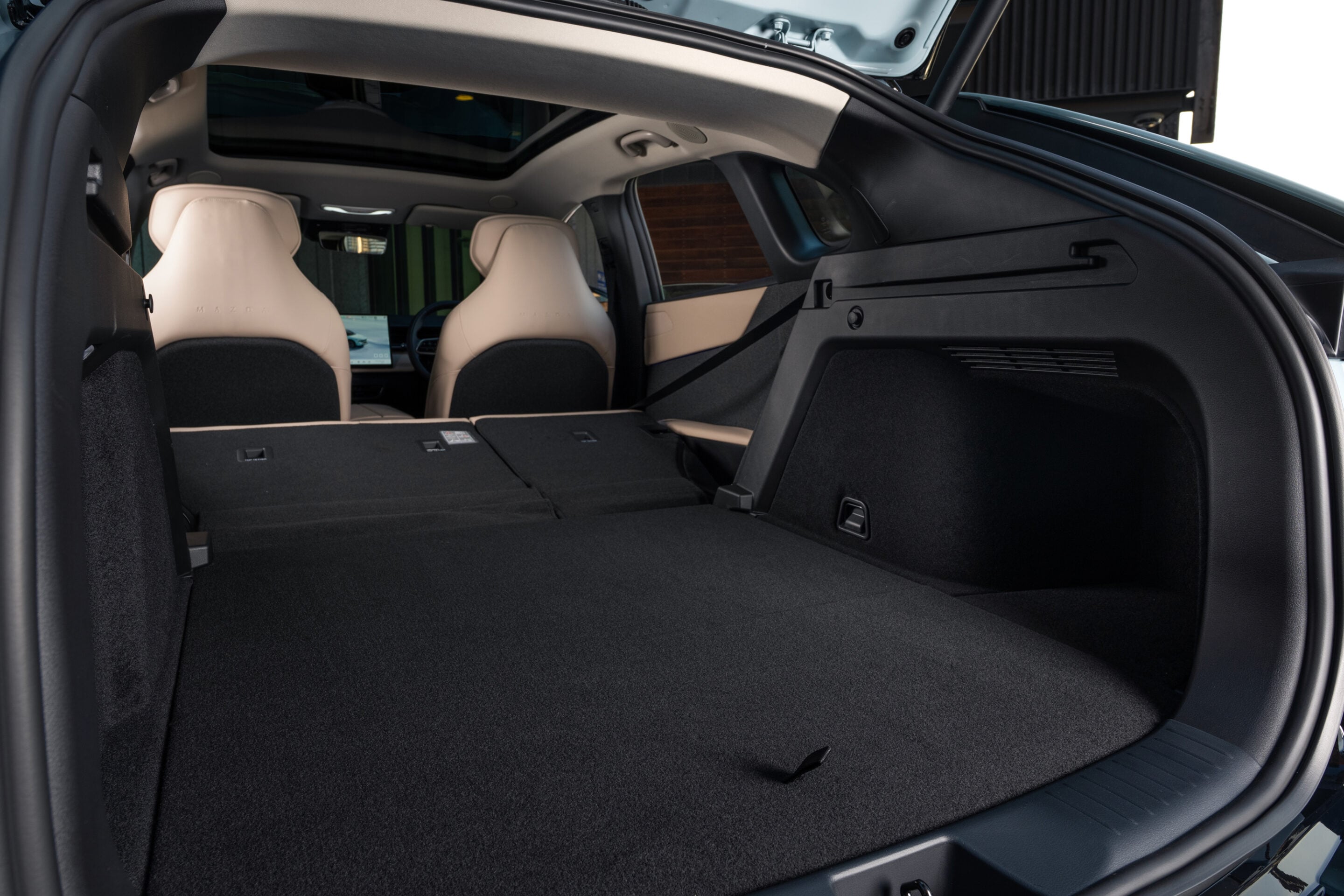
The CX-6e range kicks off with the GT variant at $53,990 (or $56,990 drive-away as a launch special) which gets you dual-zone climate control, keyless entry and start (again from your smart-phone should you so desire) heated front chairs, ambient lighting, panoramic sunroof, wireless phone charging and even vehicle-to-load capability.
Pony up for the Azami at $56,990 plus on-roads, and you gain the 21-inch alloys and stickier tyres, and those digital mirrors. Which is another way of saying buy the GT.
Mechanically and electronically, the pair are identical with a 78kWh battery giving a claimed range of up to 484km (WLPT) and the ability to absorb charge at a rate of 194kW for a 30 to 80 per cent charge in about 15 minutes.
The driving experience tends to justify the means. While the overall set-up for Australian-delivered cars borrows largely from the European tune, our cars have been further revised with Aussie tweaks to the software, damper tune, power steering and torque delivery.
And, we have to say, it all kind of works. The suspension feels about right (and is marginally better on the 19-inch wheels) and the steering is natural, neutral and nicely accurate if a tad light. There’s not an over-abundance of regenerative braking on show, but that’s matched by the mild, 190kW/290Nm driveline that, while not making any big promises on paper, feels absolutely just right for this type of vehicle.
There’s enough urge for anything you’ll throw at it, along with the silence and smoothness an EV promises, without the mind-bending thrust (and subsequent spare-bedroom threats) dished up by some of the twin-motor competitors. Yet it still climbs hills with authority and there’s just enough urge to be able to rotate the chassis on throttle alone at the critical point in a corner. Enough to remind you why rear-drive is most drivers’ natural preference, anyway.
So, it’s big inside, drives convincingly and is priced pretty well, too. You could damn with faint praise by saying the CX-6e is a great first effort at an EV SUV by Mazda. But it’s actually better than that. Suggesting that even if the Chinese joint-venture status has imposed its limitations (a lack of real buttons, for instance) the Mazda-ness has managed to shine through where it counts.
Specs: 2026 Mazda CX-6e
| Price | $53,990 GT / $56,990 Azami (prices before on-road costs) |
|---|---|
| Drivetrain | Rear-mounted electric motor |
| Transmission | 1-speed reduction, rear-wheel drive |
| Power | 190kW |
| Torque | 290Nm |
| Battery size | 78kWh Lithium Iron Phosphate |
| Range (WLTP) | 484km (GT) / 468km (Azami) |
| Peak charging speed | 11kW (AC) / 194kW (DC) |
| 10-80% DC charging time (claim) | 28 minutes |
| Dimensions (l/w/h/wb) | 4850/2088/1620/2902mm |
| Boot capacity | 363L to top of seats / 956L (seats folded) / 83L (frunk) |
| Spare wheel | Tyre repair kit |
| Kerb weight | 2130kg |
| Warranty | 5 years, unlimited km (car) / 8 years, 160,000km (high-voltage battery) |
| Service intervals | 12 months/20,000km (whichever comes first) |
| Servicing costs | $1802 (est.) five years or 100,000km |
| On sale | Now |
Nissan Australia has teased an important new addition to its lineup, with the brand expected to confirm its first plug-in hybrid model for our market later in the week. Teased ahead of an official reveal on Thursday October 8, the “highly anticipated” new model promises electrified performance and increased capability.
While Nissan has stopped short of revealing the identity of the new mystery model, evidence points strongly towards the Frontier Pro plug-in hybrid ute, which could potentially wear the Navara Pro nameplate when it reaches Australia. The Frontier Pro has already been spotted undergoing testing on Australian soil, with Nissan saying its upcoming model has been extensively tested and tuned to suit local conditions.
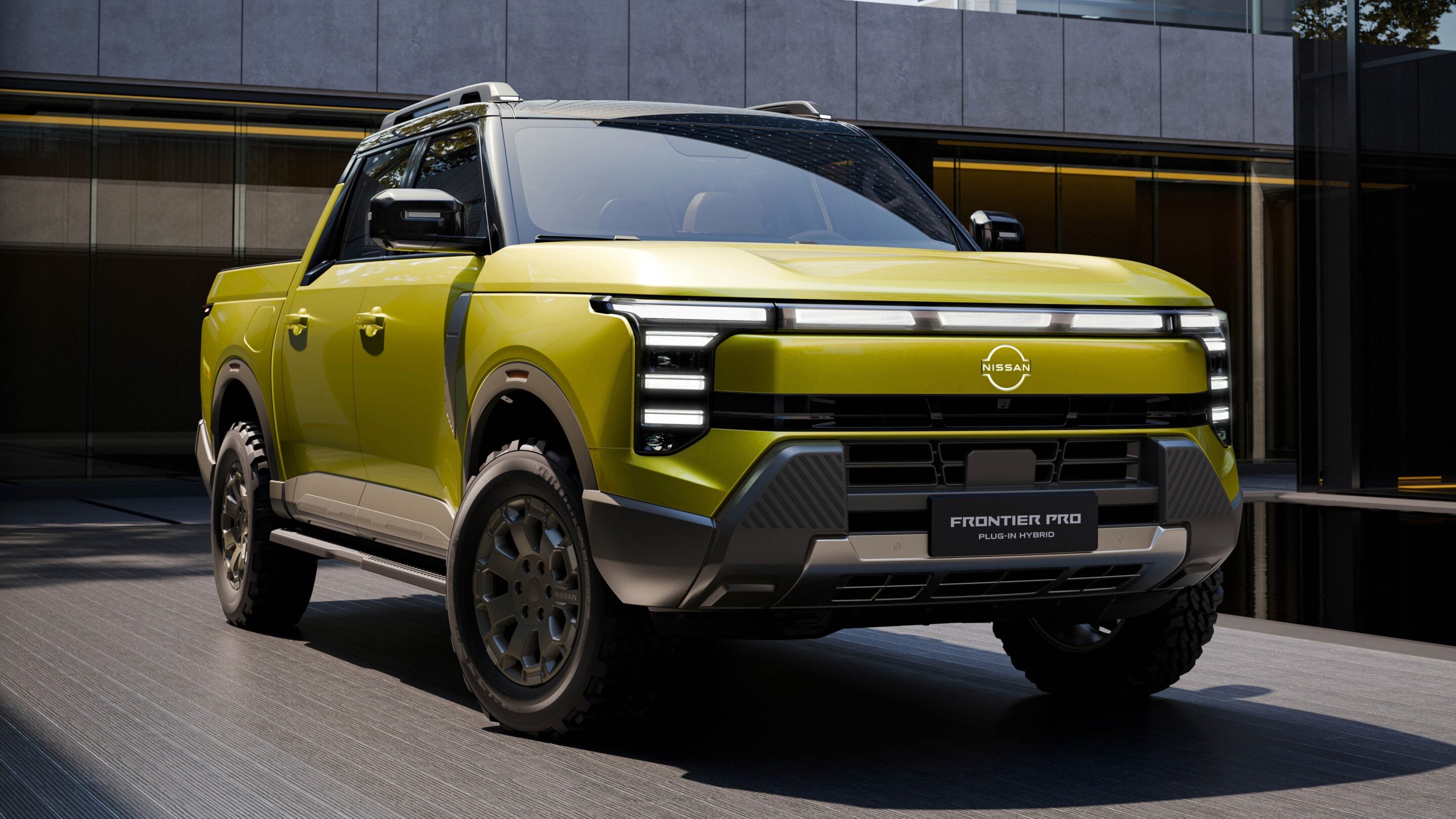
If confirmed, the Frontier Pro would give Nissan a direct competitor for the BYD Shark 6, Ford Ranger PHEV, GWM Cannon Alpha PHEV, as well as the upcoming Chery Stockman, in Australia’s growing plug-in hybrid dual-cab ute market. Importantly too, it would be sold alongside rather than replace the recently introduced new-generation Navara, which continues with diesel power.
Revealed at the 2025 Shanghai Motor Show, the Frontier Pro was developed with Chinese manufacturer Dongfeng and is closely related to the Dongfeng Z9. It is also significant as Nissan’s first production plug-in hybrid and its first electrified ute.
Overseas versions combine a turbocharged 1.5-litre four-cylinder petrol engine with an electric motor and battery pack. Depending on market specification, Nissan has quoted combined outputs of up to 320kW of power and 800Nm of torque. The Chinese market version offers more than 100 kilometres of claimed electric-only driving range, though a WLTP-rated figure is yet to be confirmed.
Exactly when the new model will reach local showrooms – and what it will be called – remains to be seen, but we won’t have to wait long for answers as the full Australian announcement will take place on Thursday, October 8.
NSW motorists will soon be able to claim money back under the state’s reduced weekly toll cap, with the first round of rebates opening on Sunday, October 11.
The toll cap was lowered from $60 to $50 a week on July 6, expanding the number of drivers eligible for relief. However, motorists have had to wait until October to lodge claims under the new threshold.
The system operates as a rebate rather than an upfront discount. Drivers continue to pay tolls normally and can then claim back eligible expenditure above $50 for each Monday-to-Sunday period.
For example, someone spending $80 on eligible toll journeys during a week can claim $30 back. A weekly toll bill of $100 would result in a $50 rebate.
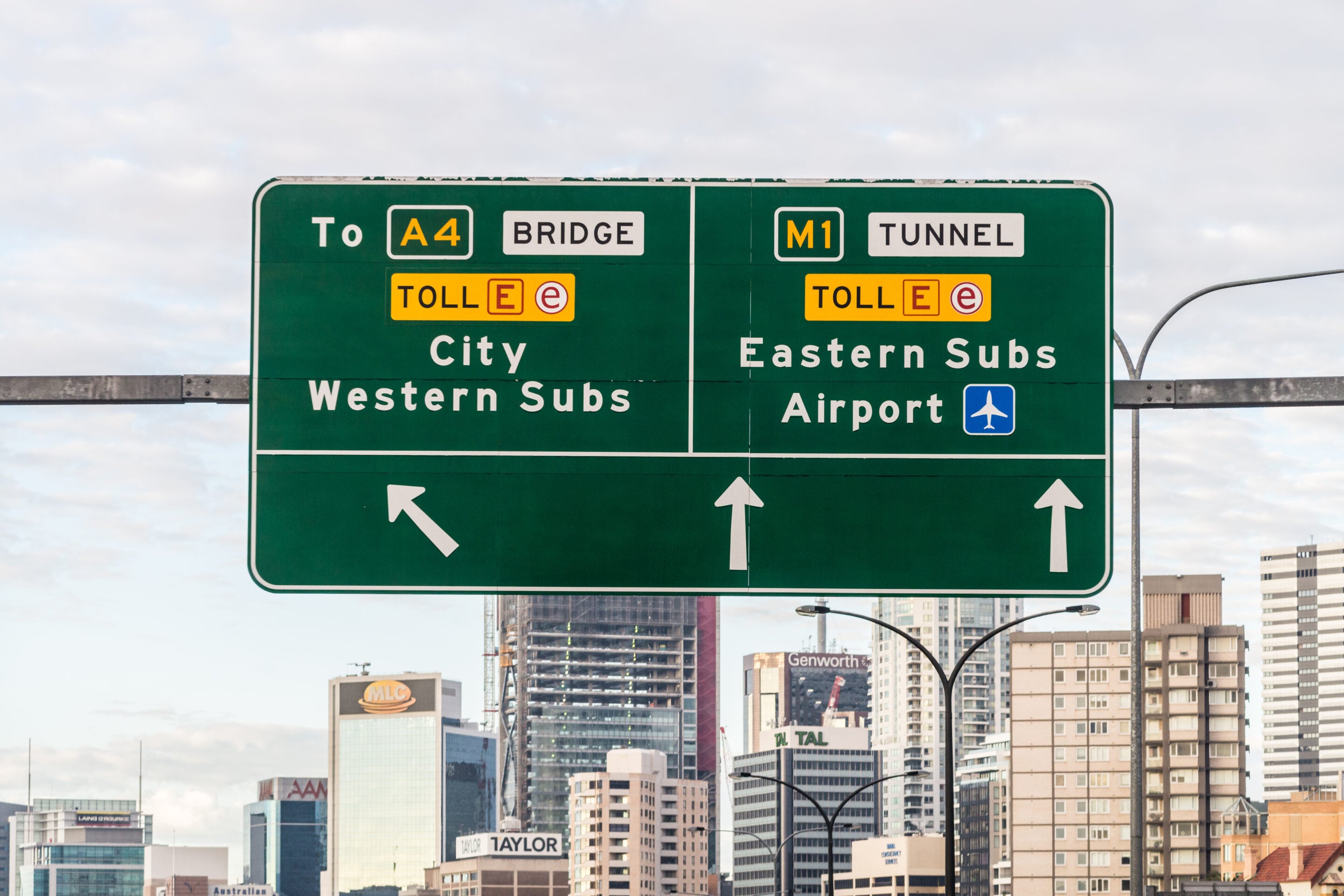
Claims apply to eligible personal toll trips in vehicles registered for private use. Rebates cover weekly expenditure between $50 and $400, meaning motorists can receive a maximum of $350 back per week for each eligible tag or licence plate.
There is also an annual rebate limit of $5000 per customer.
The first claim period covers eligible toll expenditure between July 6 and October 4.
Before making a claim, motorists need to link their personal toll account to their MyServiceNSW account. Once a claim is approved, the rebate is expected to reach the nominated bank account within 10 to 15 business days.
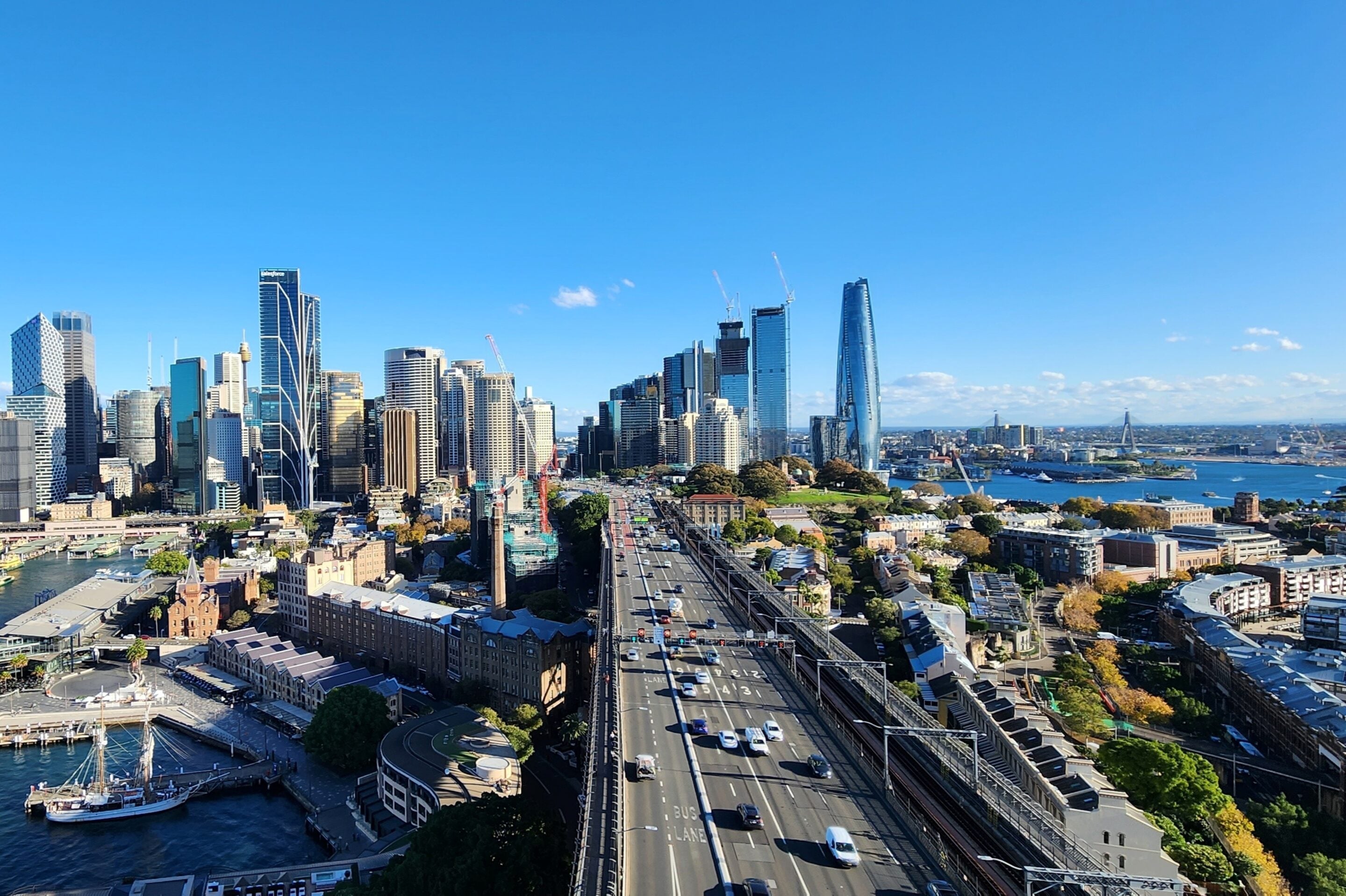
Around 200,000 additional toll accounts are expected to qualify following the reduction of the cap, on top of approximately 948,000 accounts that had reached the previous $60 threshold.
Western Sydney motorists are expected to receive a significant share of the rebates, with the region accounting for around half of toll-relief claims. Blacktown, Baulkham Hills, Auburn, Merrylands and Castle Hill are among the areas expected to benefit most.
The lower cap follows another change introduced in July that removed administration fees from unpaid NSW toll notices. Those charges had added at least $10 to individual notices and were estimated to cost motorists about $60 million annually.
XPeng reckons its extravagant X9 can tempt buyers away from established players including Mercedes-Benz and Volkswagen. Going by the enormous range, ultra-fast charging and first-class comfort of the lavish seven-seat X9, it could well be right on the money – although some frustrating technology shows there’s still room for improvement.
Built by Magna Steyr in Graz, Austria, the seven-seat electric X9 takes aim at vehicles such as the Mercedes-Benz V-Class and VLE, Volkswagen Multivan and ID. Buzz with a combination of enormous space, cutting-edge technology and levels of comfort that will make you think you’re in business class on a brand-new jet.
The imposing exterior is dominated by full-width lighting and an unusual van-like rear, but the cabin is where the X9 makes its strongest impression. All seven seats are heated, while the first two rows offer extensive electric adjustment and the four individual front and middle-row seats feature massage functions. Second-row passengers also get XPeng’s ‘Zero-Gravity’ reclining mode, which is particularly welcome while you’re waiting for the battery to recharge.
Nappa leather and generally impressive build quality reinforce the premium feel, although there were some inconsistent seams in our test vehicle. Taller passengers may also feel a bit let down by the lack of extendable thigh support.
The second row is particularly lavish. There’s an 11-litre compartment capable of chilling drinks or keeping food warm, while a 21.4-inch entertainment screen drops from the roof. Folding tables and charging facilities for laptops and mobile devices complete the executive-lounge experience.
Even with all three rows occupied, boot capacity is 721 litres, expanding to 2250 litres. The third-row seats fold electrically into the floor, while the air suspension can lower the rear to make loading easier.
On the road, the dual-chamber air suspension delivers an impressively smooth ride over most surfaces, although sharper transverse joints and deep manhole covers can upset its composure. Rear-wheel steering gives the enormous X9 a tight 10.8-metre turning circle and makes parking surprisingly easy.
The driver-assistance technology is less convincing. It can manage motorway cruising, lane changes and stop-start traffic, but occasionally wanders between lane markings. Some controls are unnecessarily complicated, as well, with too many functions buried in the touchscreen despite a capable voice assistant.
The X9’s electrical hardware is more impressive. The Long Range version uses a huge 106kWh battery and an 800-volt electrical architecture, with DC charging at up to 520kW. In testing, a full recharge took just under 30 minutes. The Standard Range model is claimed to travel about 534km, while the Long Range stretches that to approximately 615km. An AWD version is also available with a muscular dual-motor powertrain producing around 373kW, although such firepower seems excessive in a vast luxury people mover.
The X9 isn’t perfect, but its combination of comfort, space, charging performance and technology gives Mercedes-Benz and Volkswagen plenty to think about – and its cavernous interior could also make it an intriguing option for adventurous buyers and campers.
In July, XPeng revealed the X9 will be priced from $89,990 before on-roads when it arrives in Australia in two variants: the FWD Standard Range, and the AWD Performance, which starts from $109,990.
There is more turmoil in the car world in 2026 than at any time in Australian history, with action and excitement everywhere you look.
More than 70 brands – no-one has an exact count because things change so fast – are scratching and scraping for success in a showroom landscape that has changed beyond recognition in just a handful of years.
It’s like a giant chessboard, with the individual pieces fighting and falling in their battles to advance a couple of squares. It’s no exaggeration to say the strategic picture changes almost every day.
It takes a grandmaster to see the patterns and stay ahead of the game, planning and playing at the same time, and Damien Meredith is one of the best. He’s been a winner for more than 30 years and has just stepped out of the big chair at Kia Australia into a new role as ‘advisor’ to the Korean carmaker.
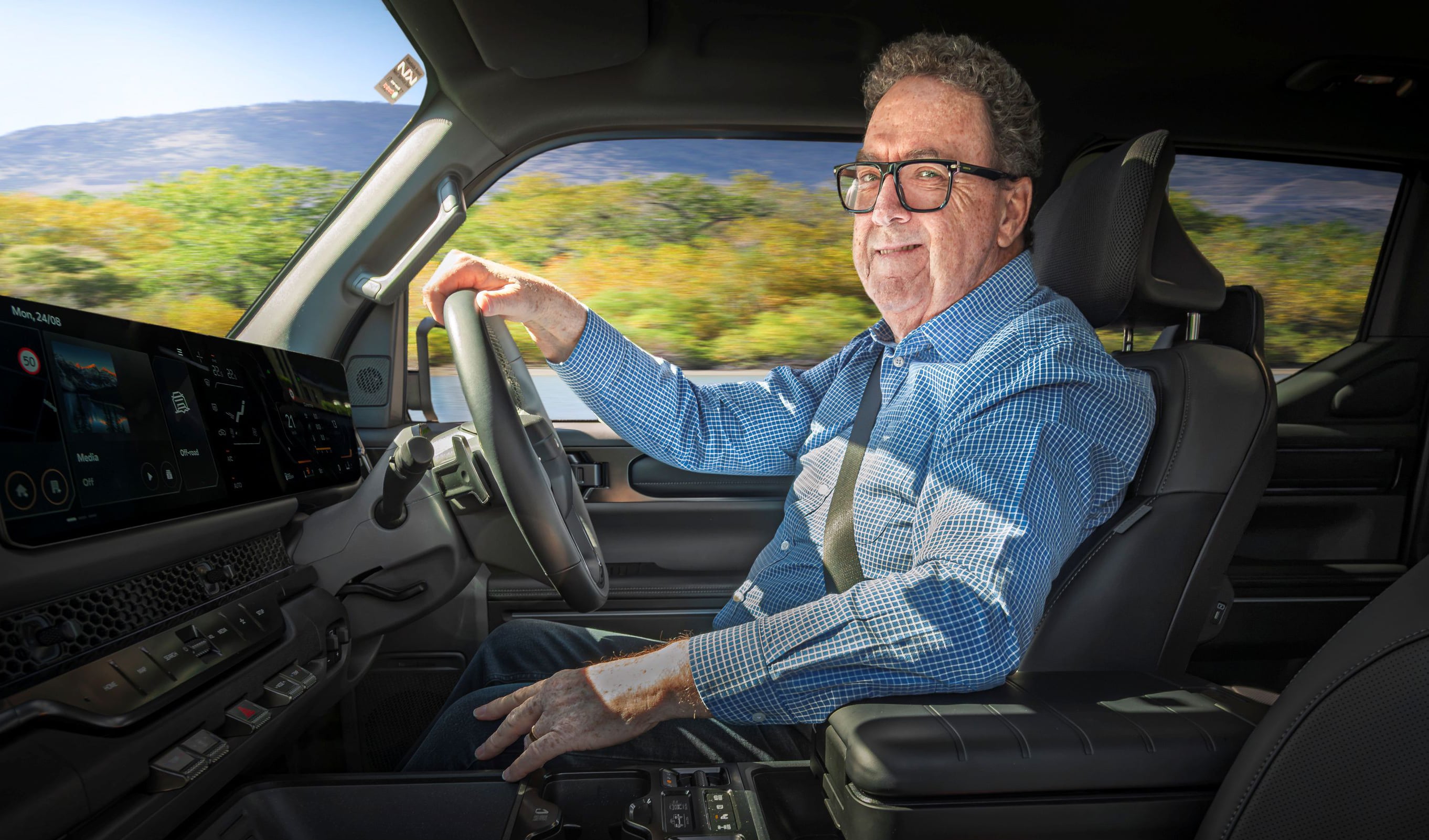
“When the Chinese tsunami started, about three to five years ago, we made a choice internally,” he tells Wheels. “We could roll up in a ball in the corner and complain and suck our thumbs, or work on refinement of the brand.”
There is no prize for picking which way he went.
Meredith confirms he is seeing a similar seismic shift to the one that first brought him into the car game in the 1980s.
“I’m a school teacher by undergraduate degree,” he recalls. “I was playing football in Melbourne for a VFA team, and the president had an HR (human resources) business.
“He said I would be better at sales and marketing than teaching. And he was correct.”
Meredith soon made the switch from the classroom to the showroom, starting on the bottom rung at Honda Australia in 1981.
“Honda was the sort of company where they gave young people great opportunity,” he reflects. “Every two or three years I had a new job.
“I was at Honda for a month where I was working in distribution. I was promoted to a motorcycle rep. That first step of moving out of distribution into the face-to-face situation, at 23, was confronting. But there were incredible learnings.”
It’s always been that way for Meredith, who has never been frightened of a challenge. It helps that he has a whip-crack memory and huge loyalty.
“I can tell you a funny story. The first day at Honda was pretty good, although moving from teaching to the commercial environment was challenging. But on the very same day, Phil Murray, who has now worked with me at Honda, Volkswagen and Kia, started work. He was fresh off the boat from Scotland.”
The reason Meredith originally went into teaching after high school is not one that anyone would expect.
“I’d been at boarding school for five years and I thought that would be a good faculty to meet girls. The female percentage was higher,” he smiles.
He met his first wife, Joanne, and they were “married for a long time”. She sadly passed away and he is now with Jenny and a Brady Bunch collection of seven kids. The youngest is five and the oldest is 36. He might have 69 on his personal clock, but the family helps keep him inspired.
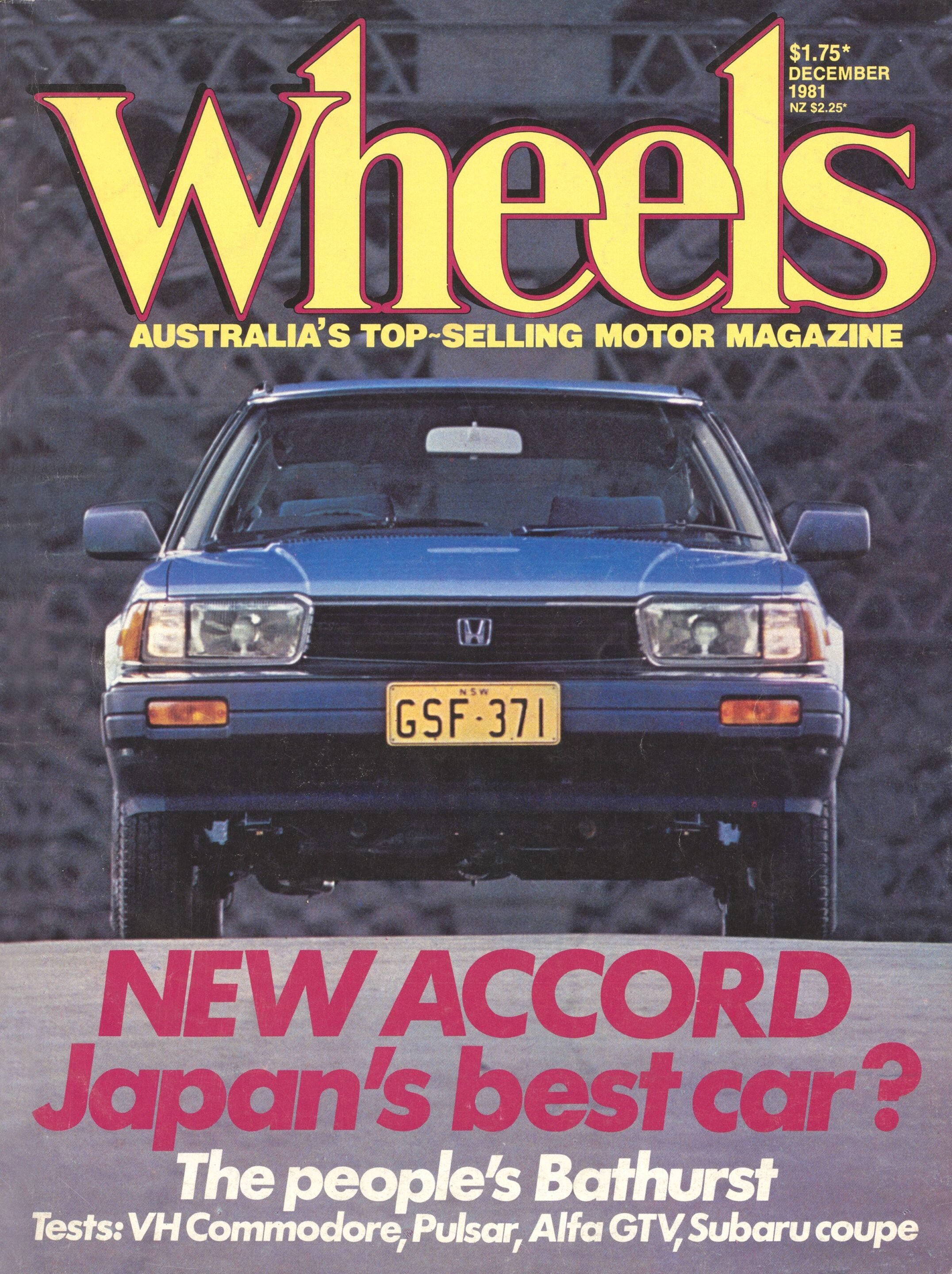
“It keeps you young,” he says. “There are benefits and they are great kids. The new 64 is the old 54.”
He’s also been flat-out this year on renovations at the family home in Sydney’s upmarket Hunters Hill, and has a side hustle in horse racing.
“It’s not just about the horse or the jockey,” he says. “There is a lot more to it than that. Buyers, trainers, tracks.
“That’s my outlet. I’ve got shares in about 12 horses. It’s a great thrill, a great buzz. When they win it’s a great feeling.
“We’re lucky we’ve got a few good ones. They pay for the slow ones.”
There are obvious parallels with the car business, as he winds the clock back. Meredith’s car career moved quickly at Honda Australia (including an MBA paid for by the company) as he learned and progressed.
“I don’t think Honda was as structured as Toyota, which has advantages and disadvantages, but I worked in every department except service. Parts, product planning, marketing, sales. I got the full spectrum of experience before I was 35 years of age.
“I was very fortunate as a young man, being involved with Honda. They were winning a Wheels Car of the Year award every three or four years.”
His first big change was a move to Volkswagen in Australia, which at the time was transitioning from an independent importer with Inchcape Motors to a full factory operation.
“After Honda I moved to Volkswagen as general manager of sales, in the early 2000s,” Meredith recalls. “It was a pretty tough time. The product timing wasn’t great for VW in Australia. Golf 5 was still a few years off, and there wasn’t a great range.
“It was a difficult time, but a lot of learnings.”
The big change, and the big opportunity, came after just a few more years.
“I got a call and joined Hyundai in 2005. General manager of sales. “Working for a Korean company … it’s the 2R rule – respect and results. It’s a two-way street. That’s basically what working for the Koreans is all about. It’s about getting results.”
There are many ways to measure the success at Hyundai, from the quality of the cars and the brand’s positive reputation, to the building of a giant new multi-storey headquarters in the Sydney suburb of Ryde.
“It’s probably one of the greatest investments of all time,” says Meredith. “It’s probably worth 10 times today what it cost to build.”
Inevitably, however, success is measured mostly by the showroom totals.
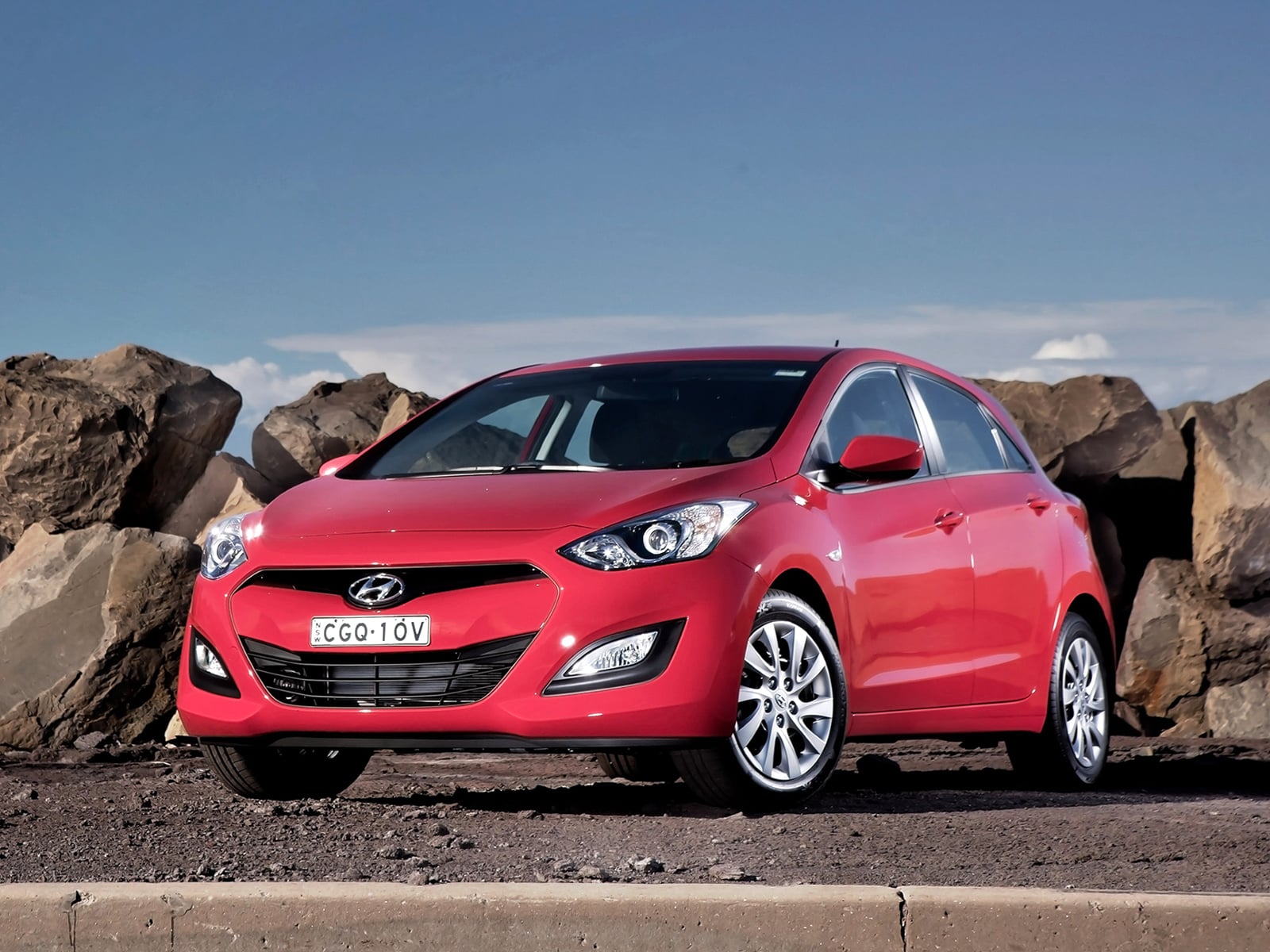
“In 2005 we were probably 38,000. When I left Hyundai in 2014 we did 100,000. So double-and-a-half. It was serious growth.”
Then came another call-up from Korea to switch from the blue team to the reds, as the Hyundai Group had identified Meredith as the person who could – and would – lead a similar Down-Under drive by Kia. How did it happen? Not by any traditional recruiting process.
“I didn’t have a choice,” Meredith laughed.
“It’s a great story. I got a telephone call on a Friday night, about eight o’clock, and I was in Melbourne watching an AFL game. I was asked ‘Are you alone and can I talk with you?’ There were 85,000 people there.”
He was presented with the chance to become Chief Operating Officer at Kia Australia and headquarters needed an answer – fast.
“I had until Monday.”
It was, of course, a no-brainer for Meredith but also typical of his career. Always thinking ahead, looking for opportunities.
“I’ve always respected the quick-and-nimble component. I met the CEO on Monday and started work the next month. Ten days.”
Meredith’s focus, starting from May 19 in 2014, was to supercharge the sales at Kia.
“I’ll be quite honest. In my time at Hyundai, Kia wasn’t on the radar at all,” he began.
“When I went across, specifically after the first month settling in and reviewing the situation with the staff, it wasn’t a good time for the brand.
“Specifically, I had a three-point strategy: fix the brand, fix the dealer network, and fix the internal structure.”
Those moves took time but they quickly began to pay off.
“We got a bit of growth in 2015, 28,000 to 32,000. Then things started to work. Good product started to come through and we took advantage of that.
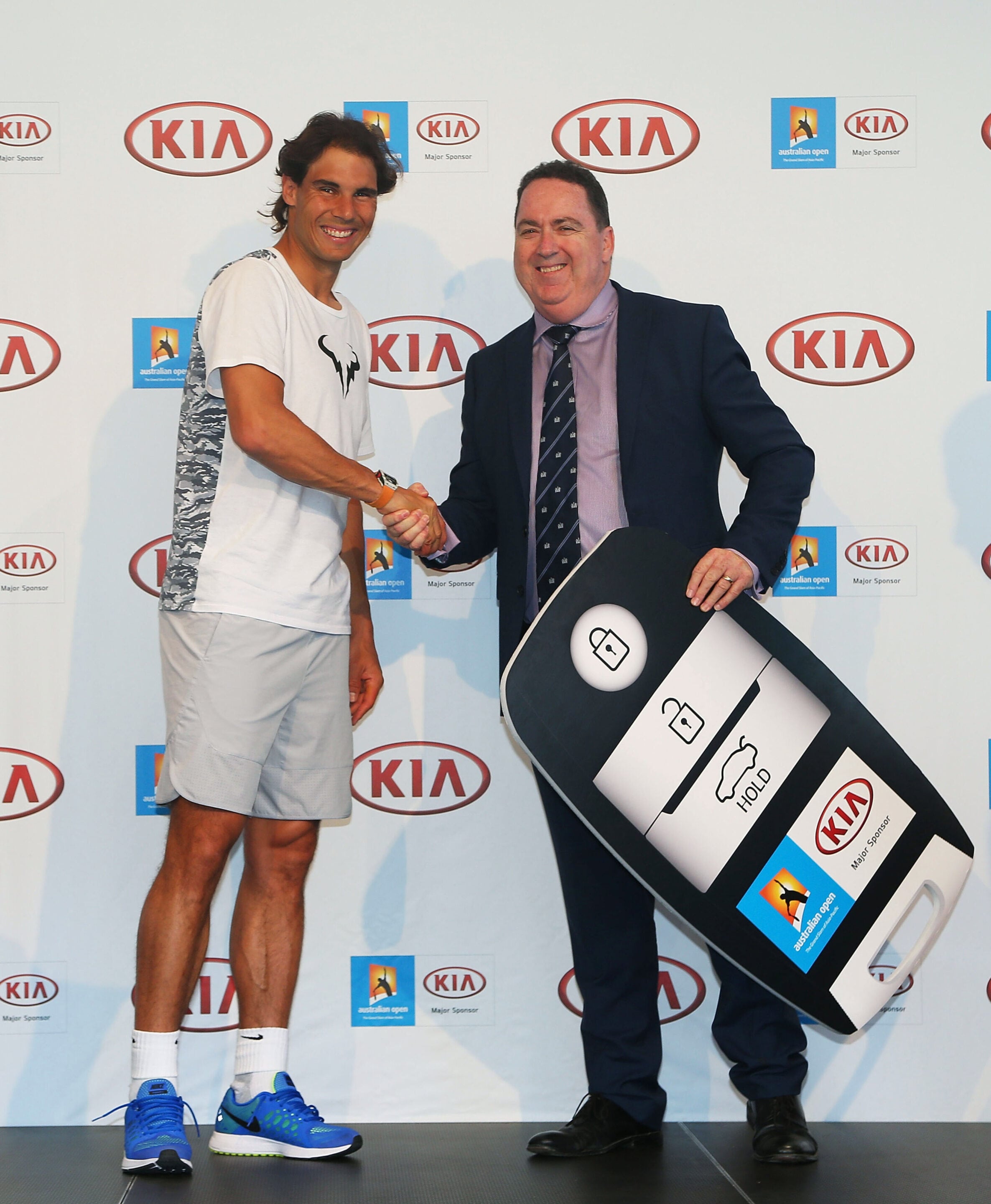
“We started to take a more aggressive approach and a more upmarket approach with the Australian
Open (tennis) and how we presented product. It was busy, it was tumultuous. But it grew the brand, and grew the sales.”
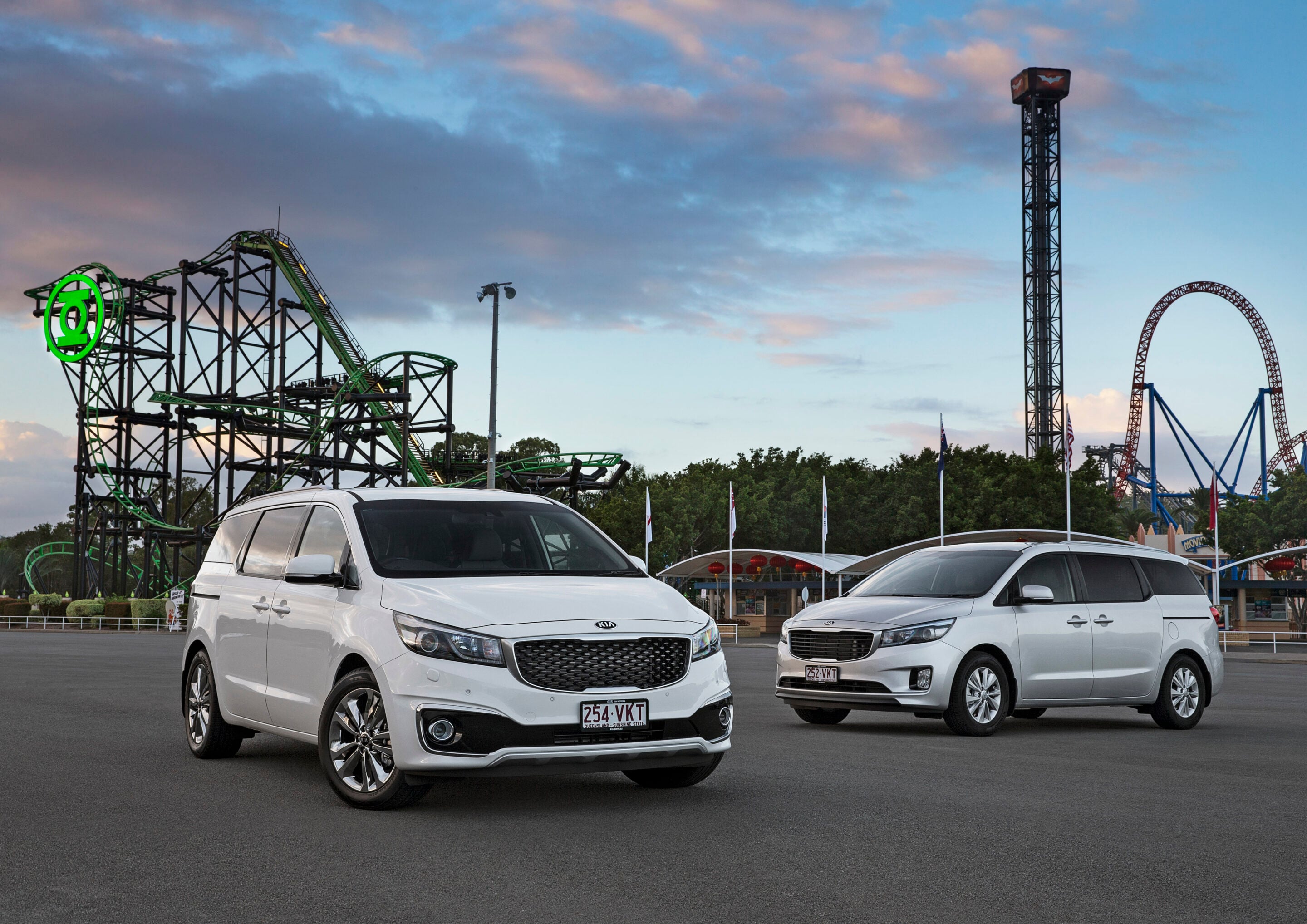
Kia was rolling with lots of impressive new models, but it was also helped by disasters – the Global Financial Crisis and a tsunami – which hit the Japanese brands it was targeting as customer conquests.
“There is one common factor about the motor industry.” says Meredith. “There are lots of reasons for success, but the major reason is good product.”
The numbers were a reflection of the improved cars, but also Meredith’s planning and shrewd moves – including 45 dealership changes in the early days.
“I think the happiest day I’ve ever had, and there’s been a lot, was when Kia went through 50,000 cars in 2017. That was a great day. We were supposed to get 50,000 by 2020 and we were two years ahead of schedule. That, to me, showed the brand was accepted in the Australian market.”
But it wasn’t all happiness and light. Meredith knew Kia needed a pick-up truck for Australia and he drove the project ute hard with Korea. So hard that he had written warnings from headquarters for talking about the project.
“Formal warnings? Two,” he recalled.
“That’s alright. One thing in a senior role is you’ve got to talk about the brand you represent, but you’ve got to be honest and realistic. It was a seven-year germination.
“I think Tasman will still be a success. But it’s just taking longer than we all thought. I actually like that industrial design, but it probably needs to be softened a little bit. The other thing is engine choice. It needs a hybrid choice and then it will go bananas.”
Away from Kia, Meredith has thoughts on many things around motoring in Australia, and the triggers for major change in the industry.
“I think it’s two things – the NVES and the surge of the Chinese in the last five years.
“The third would be the decline of manufacturing in Australia. It’s sad that a country can only have civil engineers rather than an array of engineers.”
Meredith has made some inspired – and inspiring – moves on the automotive chessboard, but he is still looking to the future and preparing for the biggest shift in living memory. It’s all about the Chinese invasion.
Surprisingly, he’s not forecasting any sort of implosion or decimation for existing brands. He believes there is a way for non-Chinese marques to survive.
“It looks like within the end of this decade, 60 per cent of sales will be Chinese. They are saying it’s 2032, but I think it will be sooner than that,” he observes.
“It’s not armageddon. It’s competition. It’s opportunity. Is it going to take a lot of work? Bloody oath it will. If it’s a 1.2-million market, and the Chinese have got 720,000 cars, what you have to do is look at the segment that’s left. Say, 500,000.
“You’ve got to set your strategy to that. You know what the Chinese are going to do. There is still a pool of cars – so you have to ask yourself how to get your share. It’s not the death of other brands from other countries.”
And what about Meredith’s future? Does he see himself being lured into the Chinese orbit to help a start-up in Australia?
“No, I don’t. Never say never, but … I’m not sure it would be value to me or a Chinese brand,” he says.
“I’ve been really very fortunate to work for the Japanese, Germans and the Koreans. My personality, and my belief parameters, work really well with the Koreans.”
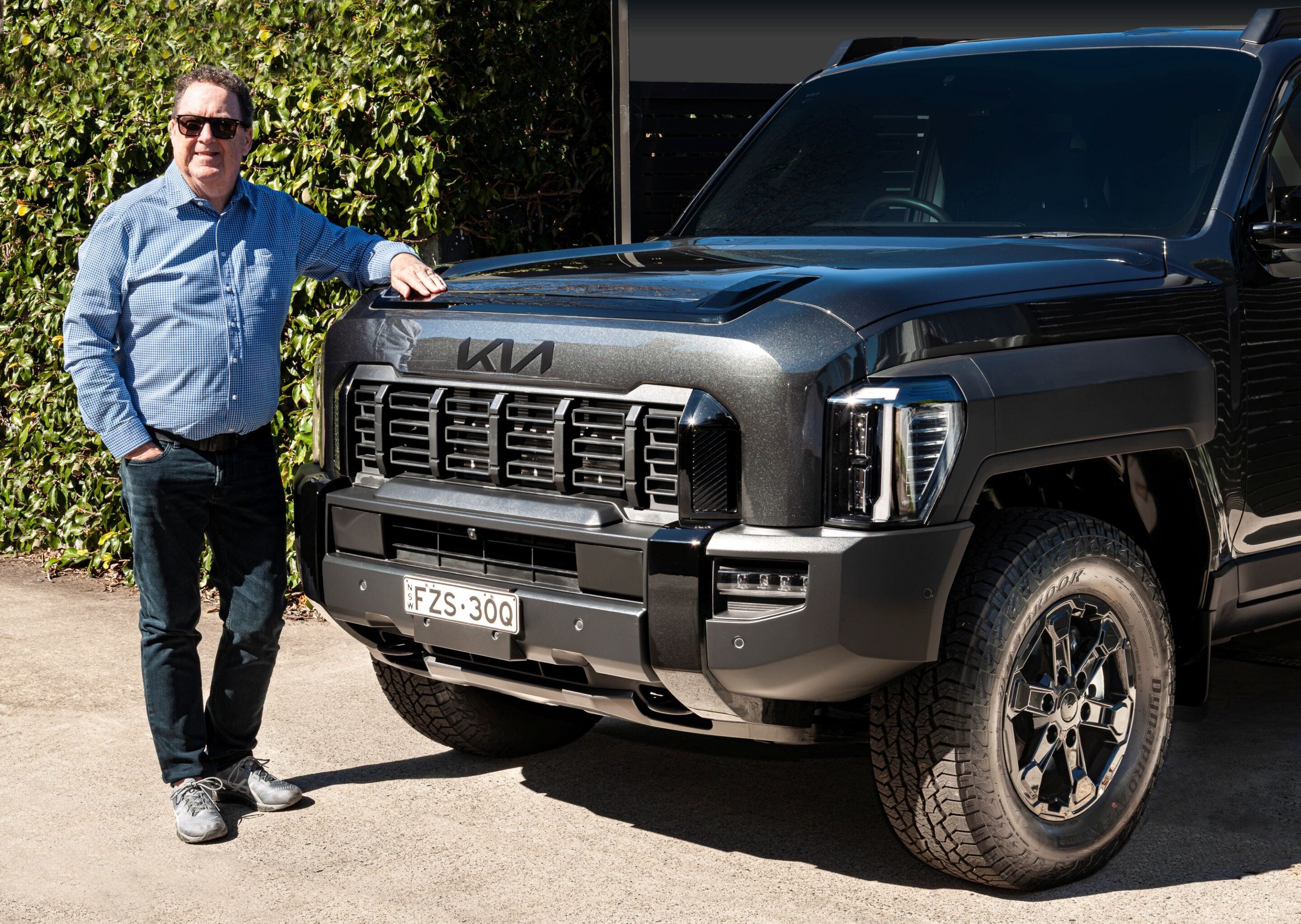
He is now working through a 12-month contract with Kia, finishing his renovations, and enjoying family time.
“I’ve been busy. And poor,” Meredith laughed.
“I’m really, really happy that I was given a huge opportunity for 14 years. In total, 21 years with the group. Not many people get that opportunity.
“But you can’t stay in the chair forever. There’s got to be movement, there has got to be change.”
So, what’s next if it’s not Chinese?
“I’ve still got twin daughters who are very young. I’ll still be working in some shape or form. But I haven’t decided what road I will take.
“I love work. I love having an active mind. And I do like making decisions.
“Most people I’ve spoken to, and who I have respect and time for, give the same advice: ‘Don’t stop, keep going’.”
Sydney is the most stressful Aussie city to drive in, followed by Adelaide – and according to a new study, the NSW capital also ranks sixth in the world, just behind metropolises like Los Angeles, London and New York.
Insurance giant Compare the Market’s look at the most stressful cities examined 79 locations across Australia and the world and judged each of them on six factors including traffic congestion, journey times, parking and speed. Each location was given a mark out of 100 and the higher that number, the more stressful it is to drive there.
In news that will surprise few locals, Sydney was the worst spot down under with a score of 56.54 – markedly ahead of the next Aussie city, but far behind the worst in the world: Dublin, with a mark of 68.38. Compare the Market found that the average commute in the harbour city takes 43.52 minutes with 43.7 per cent congestion and 140 adverse weather days per year.
Next on the Aussie stress-O-meter is Adelaide on 51.15, driven by its congestion of 55.1 per cent, which easily beats Sydney’s, despite “recording much lower parking difficulty” than its NSW counterpart.
Melbourne follows on 50.17 with 52.9 per cent congestion, an average commute of 42.06 minutes and an average speed of just 26.3km/h. However, the Bleak City’s parking difficulty was the best in the study at 1.83, with the study’s authors pointing out that the mark demonstrates “how stress is built upon by numerous factors, even when one aspect of driving may be positive”.
The rest of the Aussie rankings are: Brisbane on 49.21, the Gold Coast on 49.01, Hobart on 47.20, Newcastle on 48.41, Perth on 43.34, Wollongong on 38.91, Canberra on 38.62 and Darwin on 30.88.
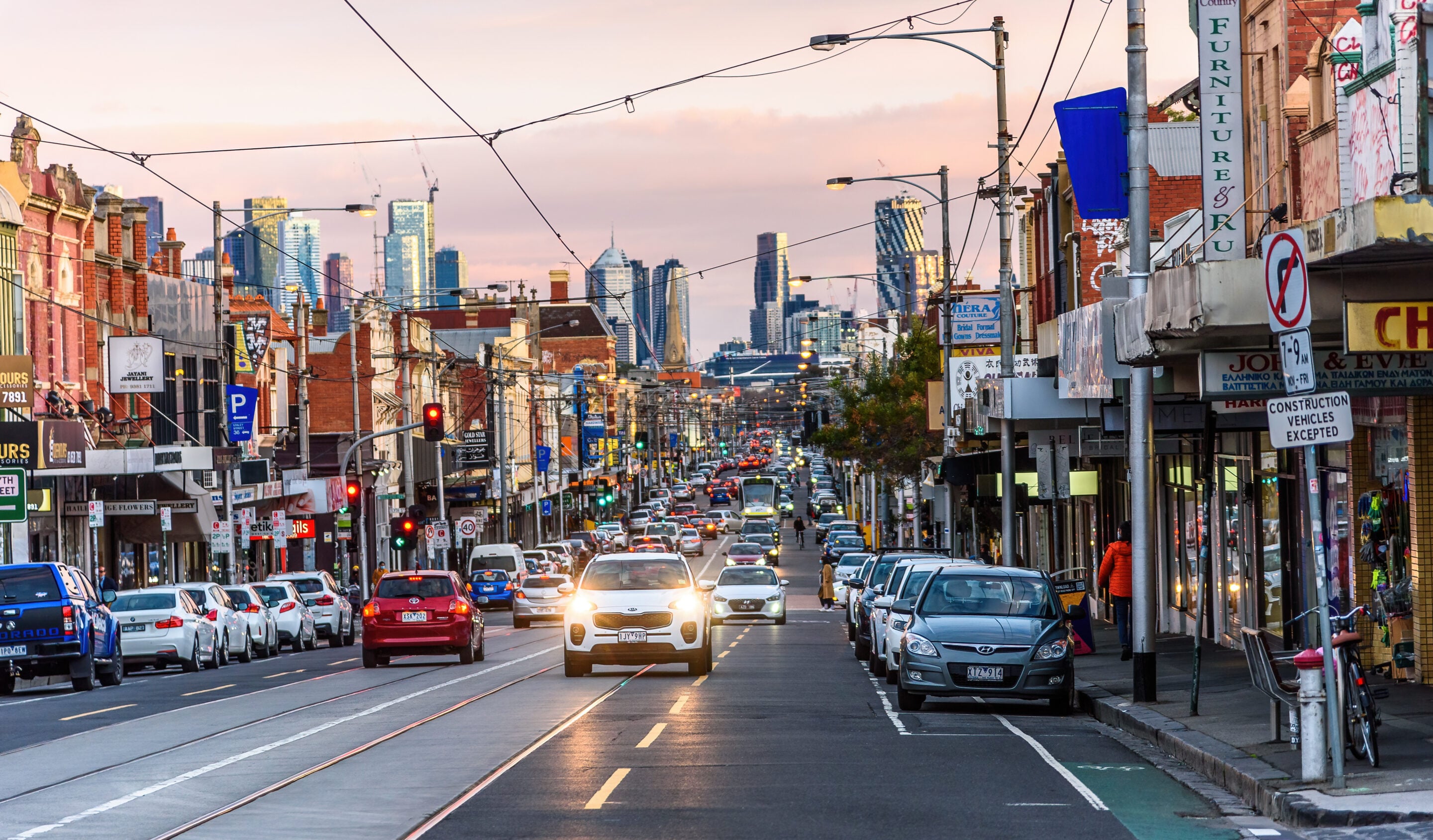
Following Dublin on the international side of the ledger is Los Angeles on 61.76, then London on 58.03, New York on 57.98, San Francisco on 56.82, Sydney, then Zurich, Miami Chicago and Brussels rounding out the top 10.
“Our research into the most stressful cities to drive in shows that there’s rarely one single cause. Instead, drivers are often facing several pressures at the same time,” said Compare the Market chief executive of general insurance Adrian Taylor.
“Planning ahead can help to reduce some of that driving stress, whether that means allowing extra time for your journey, checking traffic and weather conditions before setting off or researching parking options in advance.”
In February last year, Compare the Market’s research showed that Australia is the second-most stressful place in the world to drive, just behind Romania. Parking costs down under were found to be the highest on the planet, but our congestion rate and low road fatalities beat out several other countries.
Ask many car enthusiasts and it’s clear that sound is a big barrier to EV adoption. Without the noise of an engine to connect car and driver, many enthusiasts argue that EVs have no soul. But Mercedes-Benz’s AMG division thinks it can win over skeptics with its new AMGFORCE S+ artificial sound system that replicates a V8 soundtrack.
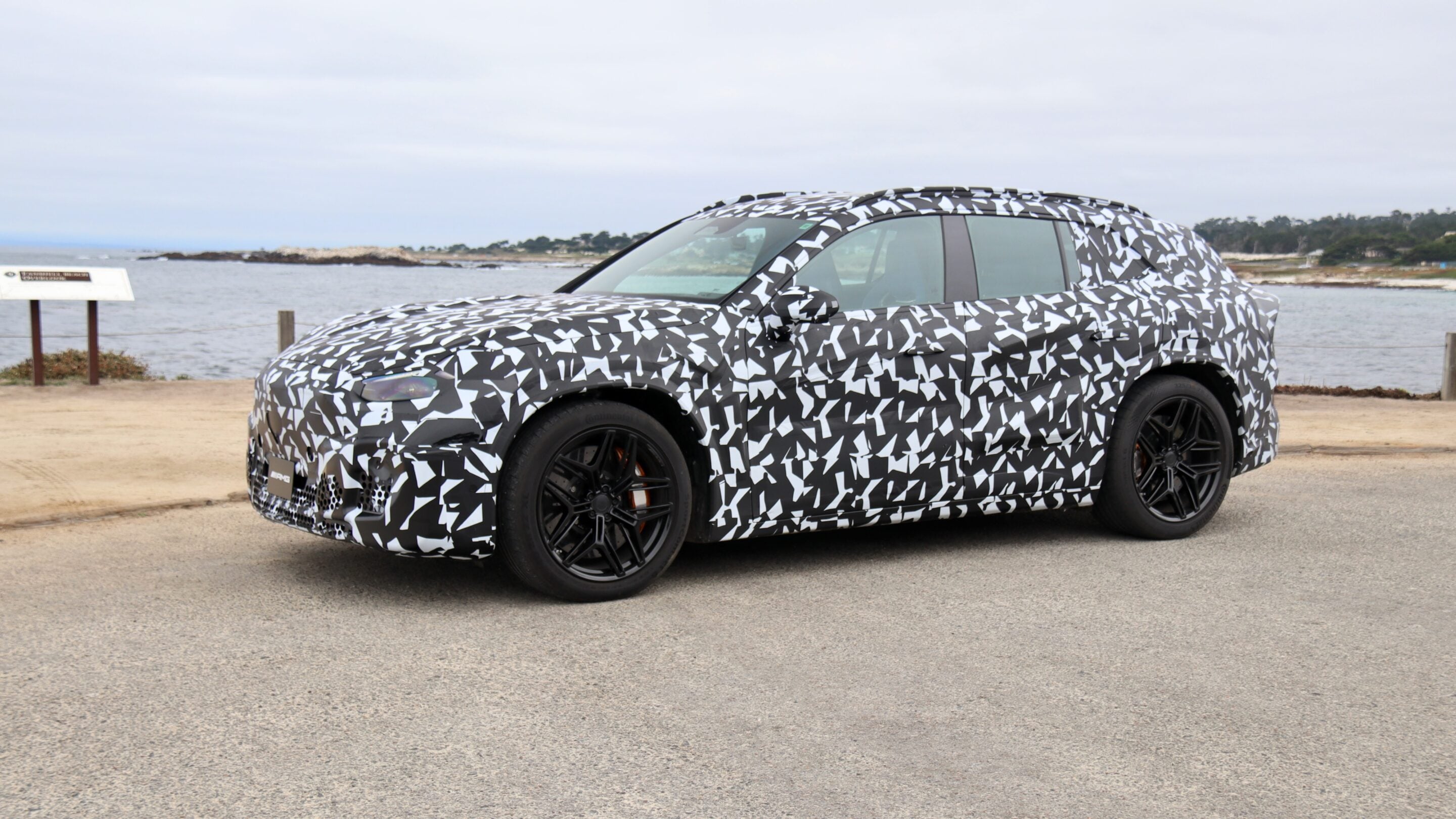
WhichCar by Wheels got to hear it firsthand while riding in a prototype of the upcoming AMG GT electric SUV during Monterey Car Week, and we were left impressed by just how successful AMG has been in giving an EV the sound of an internal combustion car.
The 2024 Wheels COTY-winning Hyundai Ioniq 5 N is currently a benchmark for how sound can enhance an EV’s sensory experience. But with the GT EV SUV, Mercedes-AMG has taken it to another level of realism.
Rather than using a purely synthetic soundtrack, the AMG GT’s noise combines audio samples from more than 1600 recordings of various Mercedes-Benz V8 models, like the legendary AMG GT R. The noise isn’t just pumped through the stereo speakers; the SUV has rockers in its seats and kickers under the floor that add an extra dimension to being able to ‘feel’ the noise.
As in the Hyundai Ioniq 5, the AMGFORCE S+ tech works alongside drive motor programming that gives you the sensation of being able to shift gears via steering wheel paddles. It’s scarily realistic. Power delivery lags and surges as you make your way through virtual ‘gears’, and the rockers in the seats give a jolt for an extra layer of realism, like a petrol car with a dual-clutch gearbox firing off rapid shifts.
During ‘downshifts’, the speakers in the floor give off crackles and pops, mimicking an ICE car on overrun. Of course, you can turn the AMGFORCE S+ system off and just run the SUV quietly like a normal EV. But since this is clearly an enthusiast product, why would you?
Driving us around Pebble Beach is Mercedes-AMG’s head of vehicle dynamics, Rene Szczepek. He can’t confirm concrete details about the new GT EV SUV just yet – even the name isn’t finalised – but we expect it to have the same drivetrain as the recently revealed AMG GT EV 4-Door. That car rides on AMG-specific EV architecture with a 106kWh battery and three drive motors that produce a combined 860kW in GT 63 spec.
The SUV should have the same 600kW peak charge rate as the sedan, allowing its battery to replenish from 10 to 80 per cent in just 11 minutes. Range will also be a strong suit; Mercedes claims 686km for the sedan, but the less-aerodynamic and thus less-efficient SUV should do a bit worse at around 650km or so.
The roads around Monterey and Pebble Beach are tight, and that gives Szczepek a great chance to show off the GT SUV’s agility. From the passenger seat, the way it changes direction is impressive. The prototype rides on large 22-inch wheels, but even while driving in S+ mode with the adaptive dampers tuned to their firmest setting, it rides fairly smoothly on California’s dotted roads.
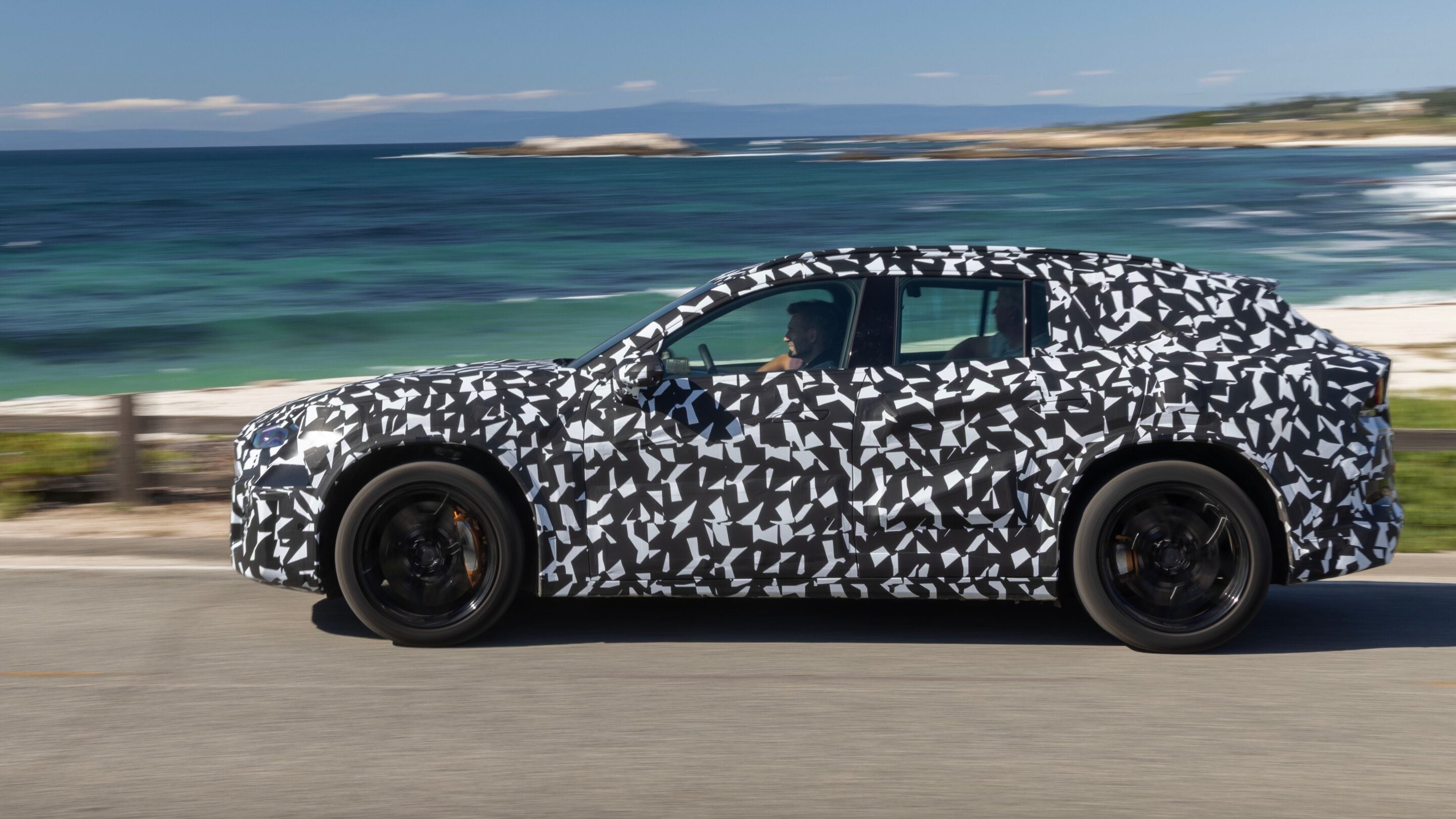
AMG claims a 0-100km/h time of 2.4 seconds for the quickest version of the electric GT sedan and we have no reason to believe that the SUV will be any slower. Szczepek gives the SUV’s throttle a few punts through its simulated gears and it actually hurts after a few goes. It’s that bloody quick.
Thanks to clever camouflage, the GT looks smaller than you might expect in person. However, the sedan measures 5094mm in length, and considering that the SUV uses the same platform, that makes it roughly 130mm longer than a GLE . It’s also difficult to gauge the SUV’s styling, but the overall shape is sort of like a larger GLA, and we expect lighting elements similar to those on the AMG GT EVsedan.
What we can tell you about in detail is the SUV’s interior. It follows the design of the GT sedan’s cabin, meaning there’s a driver-focused layout with the centre screen aimed towards the pilot. Mercedes’ seamless Hyperscreen display that debuted in the electric GLC has not been fitted to the GT SUV. Instead, there’s a large 14-inch central display running the company’s MB.OS software, plus a separate 14-inch screen for the passenger. The prototype’s upholstery also looks great – we need more blue interiors in the world.
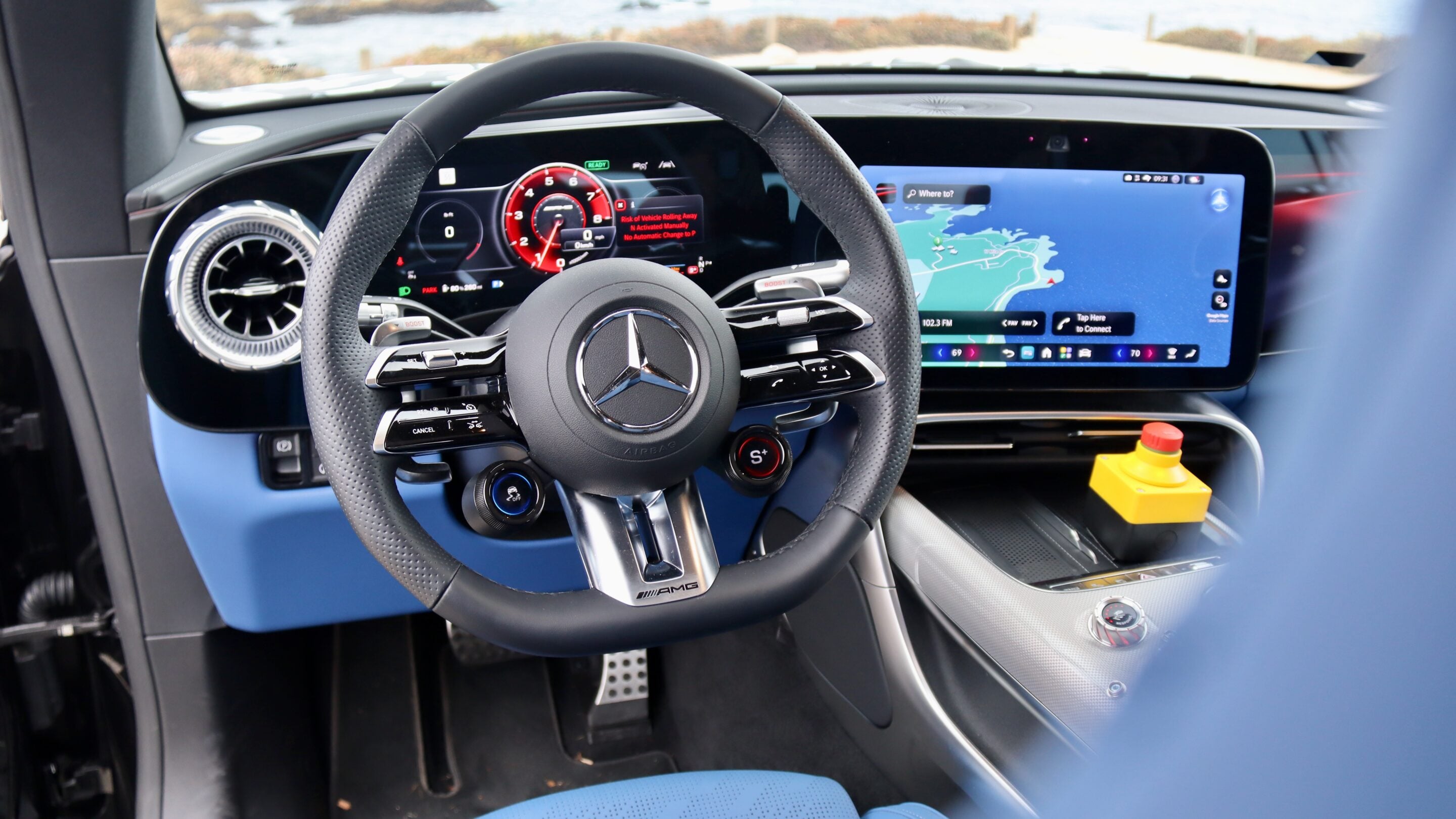
Three circular switches on the centre console allow the driver to adjust things like the SUV’s stability control and agility settings. They’re made of metal and feel great in hand, and the steering wheel has a knob to click through different drive modes. It’s clear AMG wants to offer a plethora of adjustments so GT EV drivers can tailor the experience to their individual liking.
The SUV’s rear seat is very spacious. A six-foot adult will have more than enough room, and the panoramic glass roof adds a lot of light and atmosphere. The prototype’s boot was full of testing equipment so it’s difficult to gauge the actual size, but we guesstimate it’ll offer around 550-600 litres of capacity.
Overall, from the excellent V8-like sound tuning to the ride quality and interior trimmings, our first taste of the new AMG GT EV SUV left us wanting more. The model will likely make its full debut later in 2026 with Australian sales yet to be confirmed. If this is what the future of AMG looks – and sounds – like, enthusiasts needn’t worry about the company’s EVs lacking soul.
Mercedes-AMG GT SUV estimated specifications:
| Price | $250,000+ |
|---|---|
| Body | Five-door large SUV |
| Drivetrain | Tri-motor electric |
| Peak power | 860kW |
| Battery | 106kWh |
| 0-100km/h (claimed) | 2.4 seconds |
| Range (WLTP) | 650km (based on the sedan) |
| Charging speed | 600kW |
| 10-80% charge time | 11 minutes |
| On sale | Yet to be confirmed for Australia |
There was some head-scratching when Honda launched the ZR-V in 2023, the first all-new model for the Australian market from the storied Japanese brand.
Why the headscratching? Because the ZR-V was designed to fill the gap between the smaller HR-V and larger CR-V SUV siblings. Except there isn’t a gap between small and medium SUVs in the established segment pecking order.
That hasn’t deterred Honda, and the resulting ZR-V, ostensibly a medium SUV, has proven a nice little earner, finding almost 13,000 new driveways to call home over the last two-and-a-bit years.
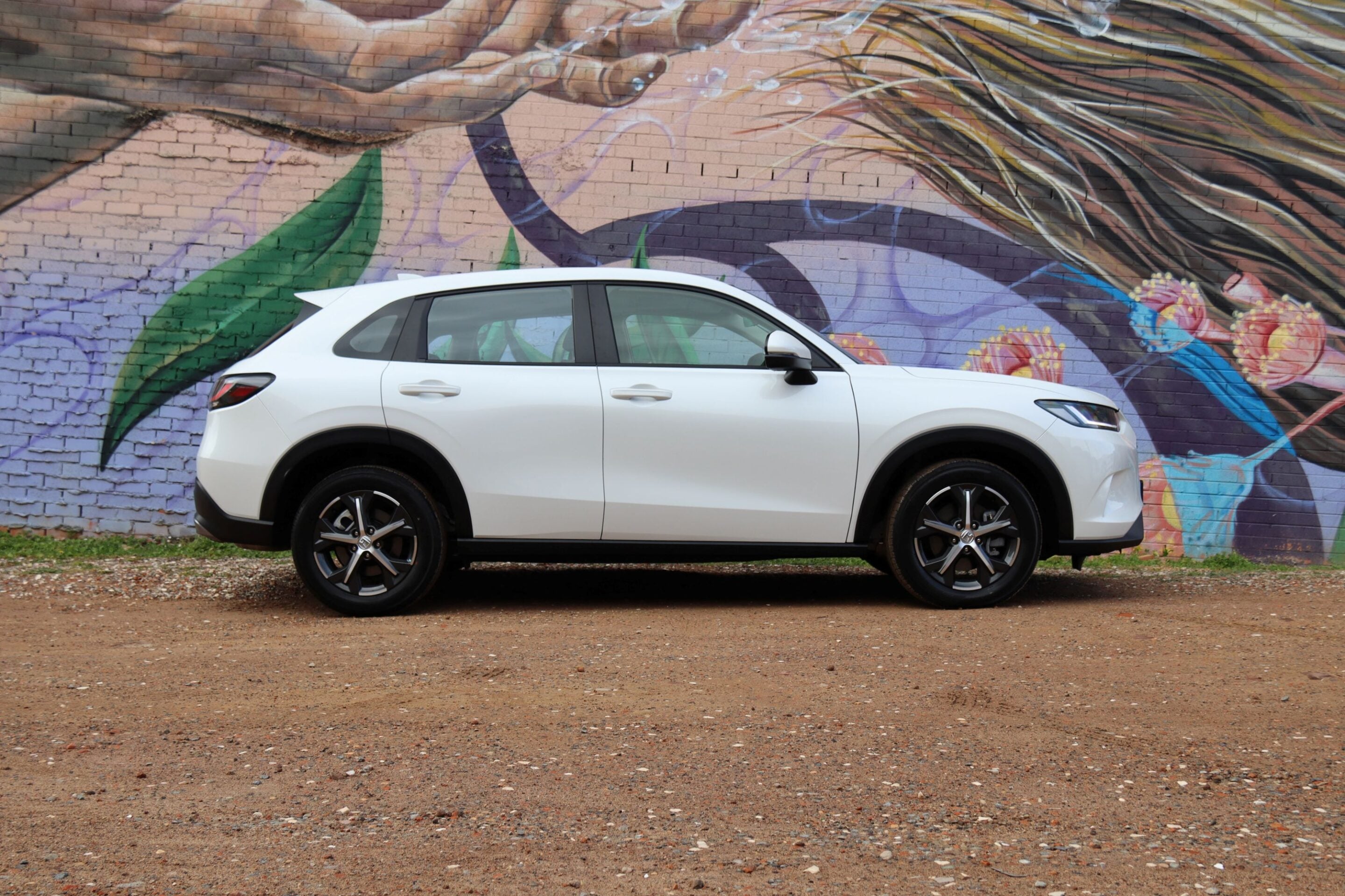
Honda refreshed the model line-up earlier this year, essentially flipping the range on its head. Where previously the range comprised four petrol variants and a single hybrid, today’s ZR-V model walk runs to three hybrids and a lone petrol variant. And it’s the latter we have on test here, a survivor in an age where hybrids of all shapes and sizes roam the landscape like apex predators.
The Honda ZR-V VTi X, to give it its full title, serves as the entry-point into the range. It’s priced from $39,900 driveaway, no more to pay. There are no options to be had – none, not even paint colour. The three-colour palette – white, grey and red – is available at no extra cost.
Power comes from a turbo 1.5-litre four-cylinder petrol engine, good for 131kW and 240Nm, placing it amongst the more powerful non-hybrid petrol mid-size SUVs in the segment. A continuously variable transmission (CVT) sends those outputs to the front wheels.
The mid-life refresh, as well as realigning the model range, brought some minor updates including a larger suite of advanced driver assist and safety tech, as well as updated infotainment connectivity that now runs the latest Honda Connect Gen 2 operating system.
It might be entry-level, but there’s nothing low-rent about the ZR-V petrol. Gear-heads will love the tech while the expansion of the ZR-V’s suite of safety and assist technologies brings it more in line with much of its competitive set.
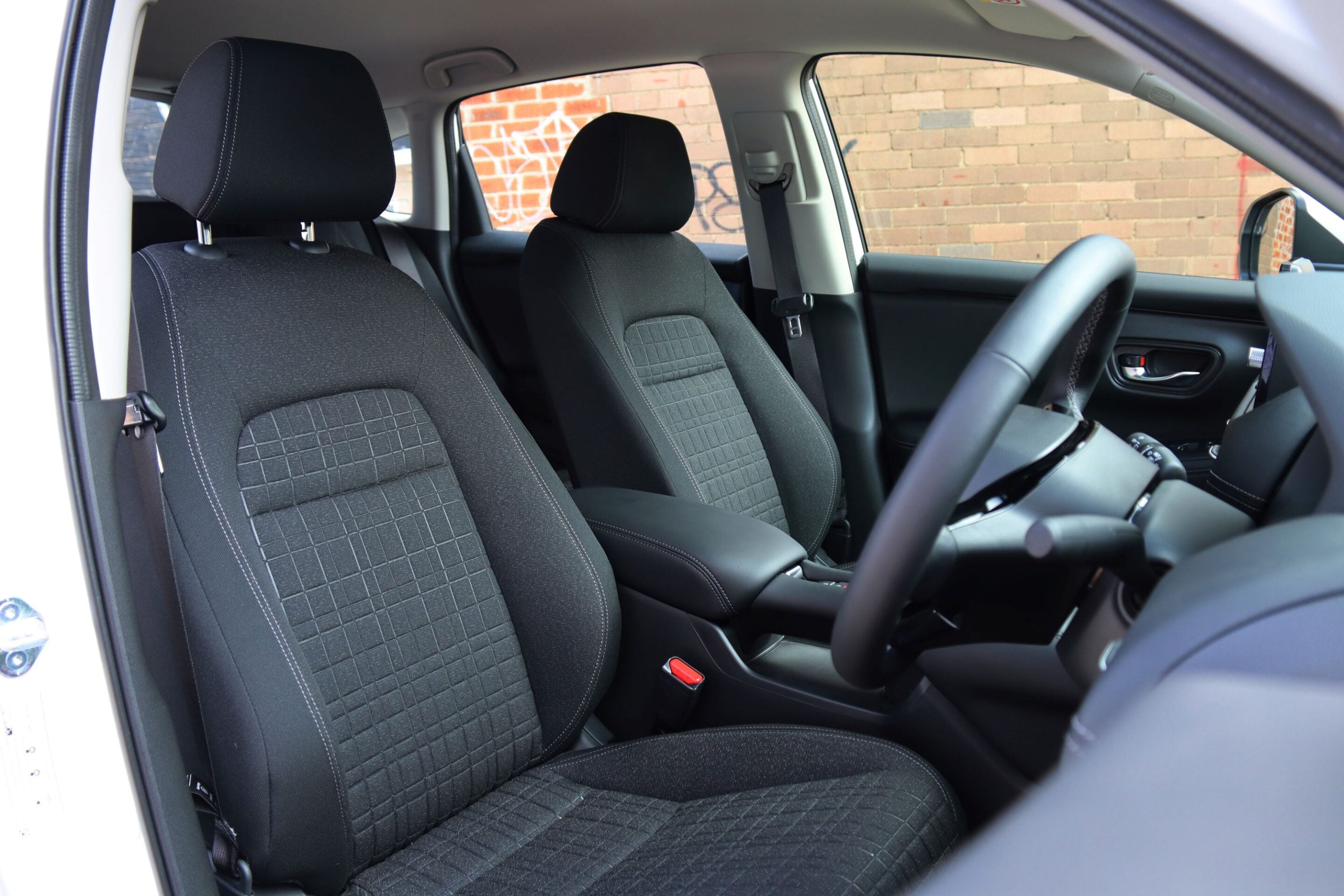
Inside, the ZR-V doesn’t try to impress with overly large screens. Instead, the focus is on practicality and the user experience, with large dials and buttons for many of the most used features. Glory be.
The patterned-cloth seat upholstery looks smart, while the seats themselves – manually adjustable – remain comfortable, even on longer journeys.
Second-row comfort is excellent with decent amounts of space in all key areas, even for taller occupants. Three adults across row two will be tight but two people will have no trouble getting comfy.
Boot space is average, a claimed 380L with the second row in use, expanding to 1312L. The seats fold flat to make for a very usable load area. Bonus points to Honda for the 17-inch space-saver spare, too.
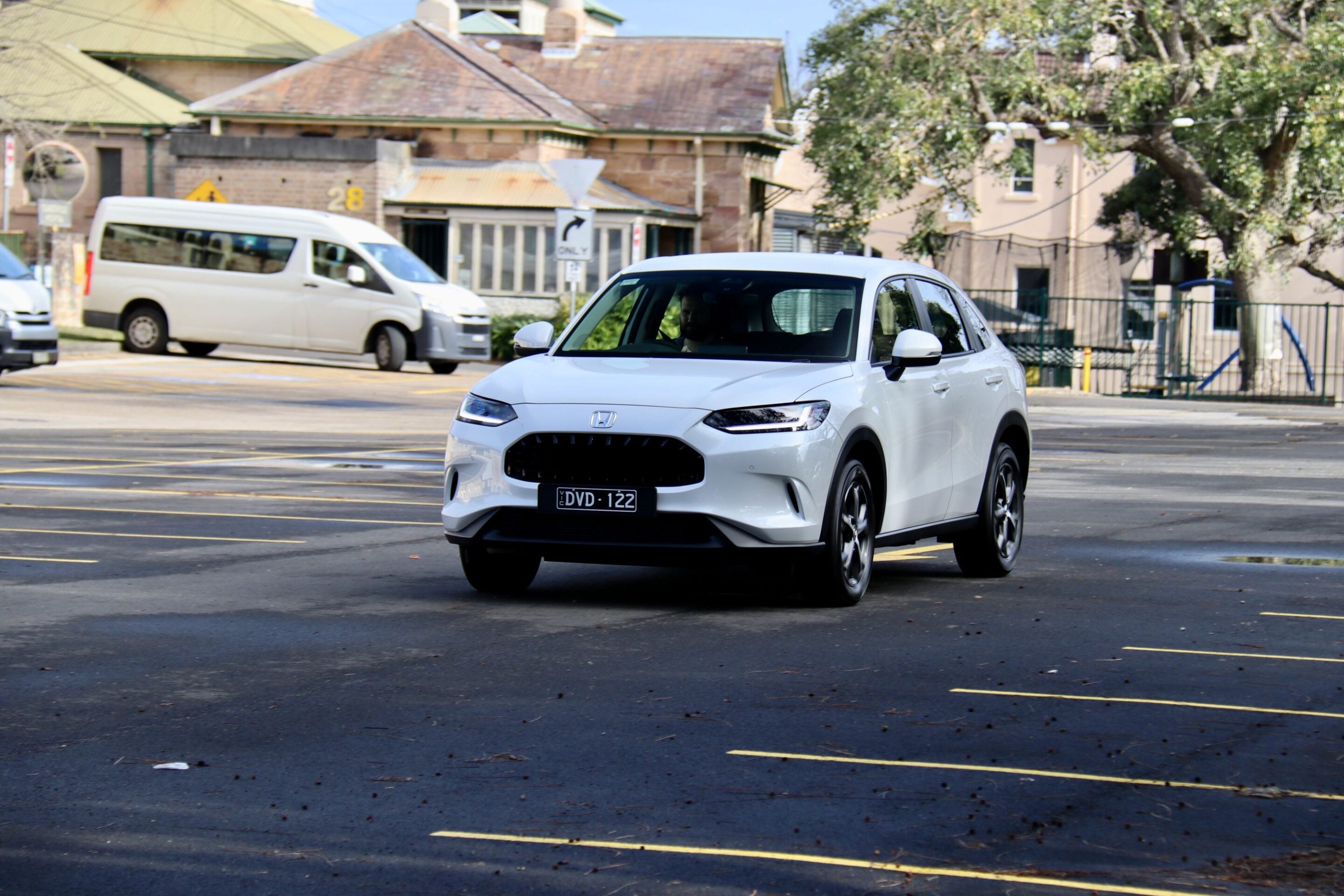
On the road, the ZR-V, despite being tagged as medium by VFACTS, drives and behaves much like a small SUV. Sharing a platform with the excellent Honda Civic imbues the ZR-V with some perky characteristics.
The 1.5-litre turbo-four offers more than enough poke to haul the relatively svelte (1470kg kerb) SUV. It’s responsive and linear in its power and torque delivery with enough of a grumbly engine note to heighten the senses.
The oft-maligned CVT is perfectly fine in the Honda, able to deliver torque as needed with minimal fuss. Does it drone like some CVTs are wont to do? A little, but there are far worse applications of the tranny-tech on the market.
Ride comfort errs on the side of firm. It’s not bone-jarringly annoying, but lumps and bumps are transmitted into the cabin. Road noise, which can be a touch too much on rough surfaces, is also a constant companion.
Body roll and movement is kept nicely in check, the ZR-V’s well-sorted chassis more akin to a hatchback than an SUV, hardly surprising considering its Civic underpinnings.
The big ask comes at the bowser, where it drinks 91-octane regular unleaded at 8.5L/100km, based on our testing. Its hybrid siblings regularly return a consumption figure of low-to-mid 5L/100km, based on our previous tests.
And therein lies the quandary for prospective buyers. Spend more up-front for the hybrid (the cheapest ZR-V hybrid commands a $3500 premium) and save on fuel? Or opt for the most-affordable ZR-V, period, and pay more at the pump?
Either way, the Honda ZR-V is a brilliant little urban vehicle, the Goldilocks SUV for buyers because it deftly bridges the gap between small and medium SUVs in a smart, well-equipped and fun-to-drive package.
Specs
| Price | $39,900 driveaway |
|---|---|
| Engine | 1498cc four-cylinder turbo-petrol |
| Power | 131kW @ 6000rpm |
| Torque | 240Nm @ 1700-4500rpm |
| Transmission | Continuously variable (CVT), front-wheel drive |
| Fuel use (claim) | 7.0L/100km |
| Fuel use (tested) | 8.5L/100km |
| Fuel type/tank size | 91 RON regular unleaded, 57 litres |
| Dimensions (l/w/h/wb) | 4568/1840/1610/2655mm |
| Boot space | 380L (seats up) / 1312L (seats folded) |
| Spare wheel | Space-saver |
| Kerb weight | 1470kg |
| Warranty | 5 years/unlimited km |
| Servicing costs | $995 5 years/50,000km |
This story first appeared in the October 2026 issue of Wheels magazine, now on sale. Subscribe here and gain access to 12 issues for $109 plus online access to every Wheels issue since 1953.
